Urinalysis Decoded: pH, Protein, Crystals, and What Your Vet Sees Under the Microscope
Urinalysis is the most underrated test in veterinary medicine. It is cheap, quick, and often the first place a kidney, bladder, or hormonal problem becomes visible.
Urinalysis is the most underrated test in veterinary medicine: it is cheap, quick, and often the first place a kidney, bladder, or hormonal problem becomes visible — but only when the concentration check, dipstick, and sediment exam are read together.
Owners sometimes see "urinalysis" on an estimate and wonder whether it is worth it. Among veterinarians, there is no debate: urine tells stories blood cannot. It reveals how well the kidneys concentrate, whether the bladder is inflamed or infected, what crystallized where it should not have, and — with one number — how much water the body chose to keep or lose.
A urinalysis combines three layers: a color and concentration check, a chemistry dipstick, and a microscopic sediment exam. Reading them together is an art taught in every veterinary curriculum — and summarized well in the eClinPath urinalysis materials.
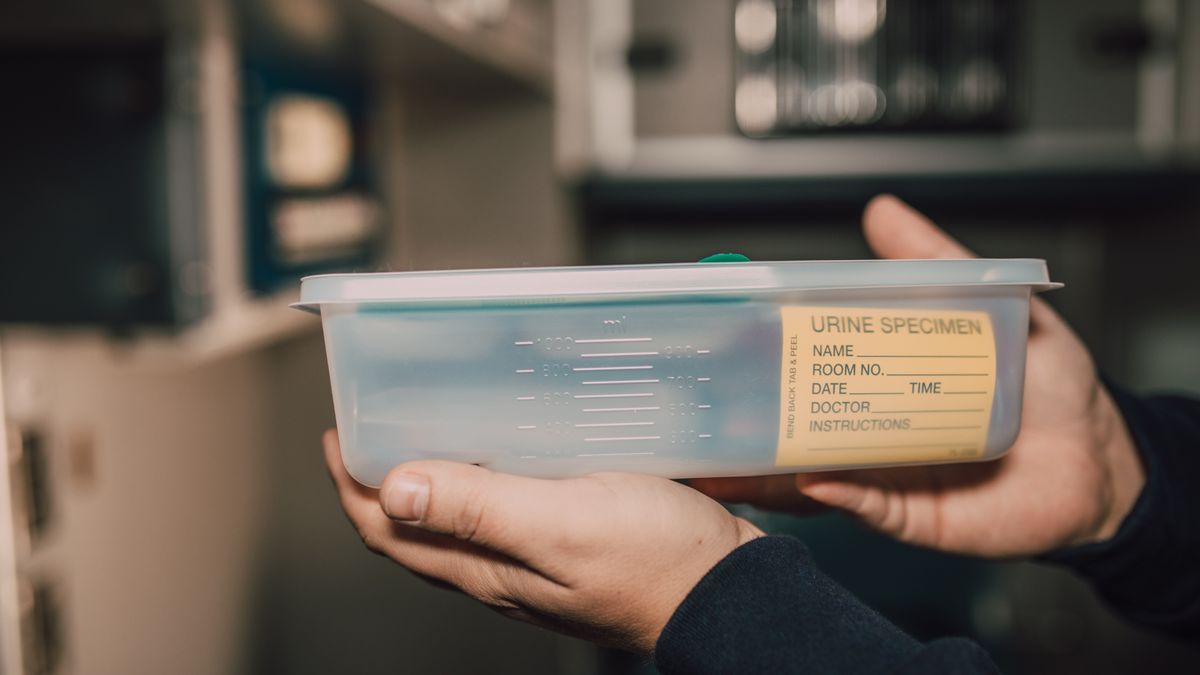
A dipstick alone is never a urinalysis — the concentration check and sediment exam carry equal weight.
Specific gravity: the kidney's report card
Urine specific gravity measures how concentrated the sample is. Healthy kidneys juggle water constantly, producing dilute urine after a big drink and concentrated urine during dehydration. When a dehydrated pet produces dilute urine, the kidneys are failing at their basic job — a finding that often surfaces here before creatinine rises.
In cats, dilute urine triggers a short, valuable list: kidney disease, diabetes mellitus, hyperthyroidism, and certain medications. In dogs, the same finding pushes attention toward kidney disease, pyometra in unspayed females, and Cushing's disease. Collecting first-morning urine maximizes the information, because it represents the longest window of the body's choices.
The dipstick layer
The chemistry pads detect pH, protein, glucose, ketones, bilirubin, and blood. Each has caveats that veterinarians learn to respect. A pH that swings with diet is normal; alkaline urine in a struggling patient deserves context. Protein traces in cats can be normal, while microalbuminuria in older patients is an early warning for renal and hypertensive disease.
A positive blood pad is a big soft sign: crystals, infection, stones, trauma, and inflammation can all cause it. Glucose and ketones point toward diabetes; bilirubin in urine — especially in a dog — is never ignored for long. Dipsticks are the fastest, least expensive way to make a pet's hidden status visible, and veterinarians read them as a panel, not as isolated positives.
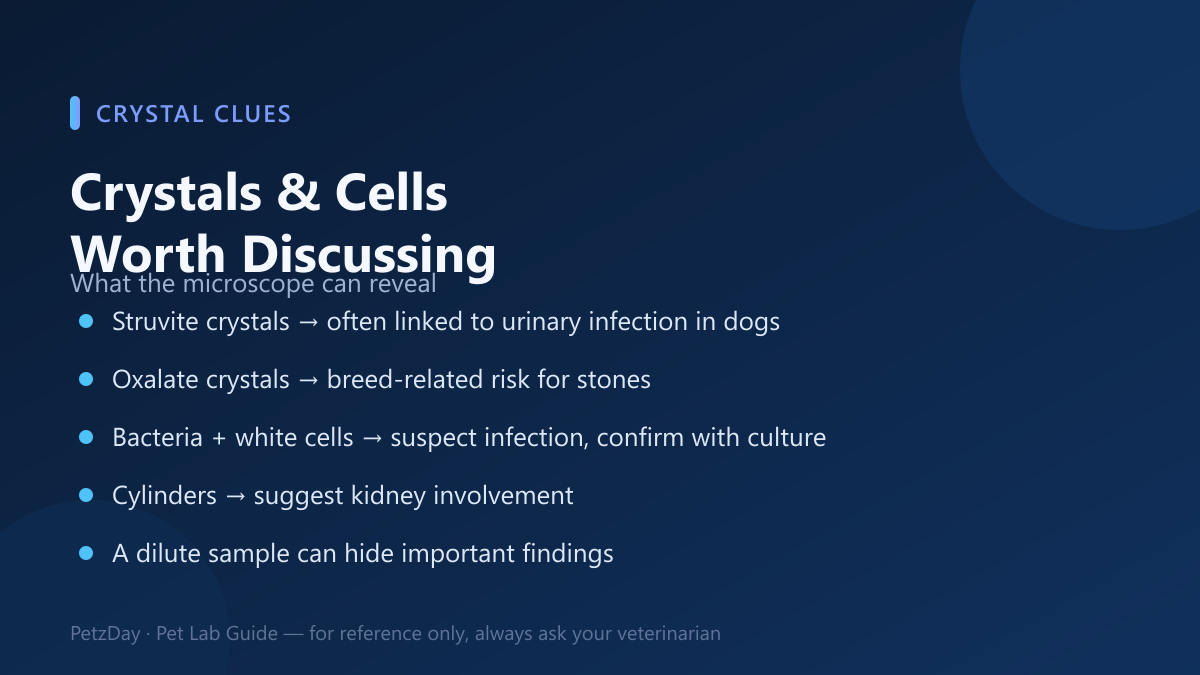
Sediment findings are most powerful when combined with the pet's history, imaging, and the chemistry panel.
The sediment exam: particles you cannot fake
Under the microscope, urine becomes a specimen of crystals, cells, and casts. Struvite crystals in dogs often accompany urinary infection; calcium oxalate crystals echo breed risks for stone formation. White blood cells in number suggest inflammation or infection, red blood cells suggest irritation or bleeding, and epithelial cells hint at where the irritation lives along the urinary tract.
Casts — cylindrical molds formed inside kidney tubules — are among the most kidney-specific findings available on a slide, though they are easy to miss when a sample is late or mishandled. This is one reason veterinarians prefer fresh samples, examined quickly, over samples that sat in a refrigerator overnight.
Getting a useful sample
Free catch samples from a walk are convenient but can carry debris from the lower tract. Midstream collection reduces contamination, and cystocentesis — a sterile needle collection straight from the bladder — produces the gold-standard sample for culture. When infection is plausible, culture with sensitivity testing follows, because guessing antibiotics has become a losing game.
If your pet's urination pattern changed — more trips, straining, accidents, or larger volumes — the urinalysis is step one. Bring a sample if you can, but do not delay: the fresh-first morning sample your clinic collects is worth a dozen of the old ones sitting at home.
Blood tells you what is in the body. Urine tells you what the body is doing with it.
Questions to ask your veterinarian
- What is the specific gravity, and can we compare it with hydration?
- Was the sample sterile, or could contamination explain the findings?
- Are crystals present, and do they match the pH?
- Should we culture before starting antibiotics?
- When should we recheck to confirm improvement?
Collecting a urine sample at home: a practical guide
A good sample starts with a clean, dry container — a washed jam jar or the sample cup your clinic provides. Aim for the middle of the stream rather than the first dribbles, which carry debris from the lower tract. Most tests are happy with a few milliliters, though a container with at least a teaspoon of urine gives the laboratory room to repeat the dipstick and prepare a sediment slide.
Timing beats effort. First-morning urine is the most informative sample of the day, because it shows how much water the kidneys held overnight. If the sample must wait, keep it in the refrigerator and deliver it within a few hours — and be honest with the clinic about its age, because time and temperature change crystals and cells. A sample collected yesterday and left on the kitchen counter tells a story that never happened.
Cat households can improvise politely. Empty a litter tray, wash it well, and substitute non-absorbent material — commercial urine-collection beads, plastic packing bubbles, or even a clean plastic bag taped loosely over the litter. Many cats object briefly and then cooperate. If your cat refuses, do not force the issue; a clinic collection is quick and stress is the enemy of feline diagnostics.
If your pet strains without producing urine — especially a male cat, and especially on a weekend evening — stop reading and call an emergency clinic. That combination is the signature of urethral obstruction, one of the most time-critical situations in veterinary medicine. No sample is worth a delay of even an hour when that picture appears.
Keep Every Result in One Place
Results only become a story when you can compare them. PetzDay keeps every lab panel in one timeline you own — so trends stand out, and any clinic can see the full history in a single link.
- New to blood work? Start with the complete guide to dog blood test results.
- Browse more lab value guides, or create a free PetzDay account to keep your own results in one place.
References and further reading
- Cornell eClinPath — Urinalysis
- Merck Veterinary Manual — Urinary System Evaluation
- VCA Animal Hospitals — Urinary Tract Health
- American College of Veterinary Internal Medicine