Kidney Values 101: BUN, Creatinine, SDMA, and Urine Specific Gravity
Kidney panels contain four interlocking pieces. Knowing how BUN, creatinine, SDMA, and urine concentration fit together helps you understand early kidney disease.
Kidney disease is one of the most common chronic conditions in older cats and dogs, and its early signs are famously subtle. The blood panel gives veterinarians their first structured look at kidney health through four values that work best in combination: blood urea nitrogen (BUN), creatinine, symmetric dimethylarginine (SDMA), and the urine specific gravity from a urinalysis.
No single one of them is reliable alone. BUN moves with hydration and diet; creatinine rises late; SDMA is more sensitive but not always available; urine concentration reveals whether the kidneys can still do their fundamental job. Read together, they paint a picture used for staging — notably by the International Renal Interest Society (IRIS) system that guides treatment decisions worldwide.
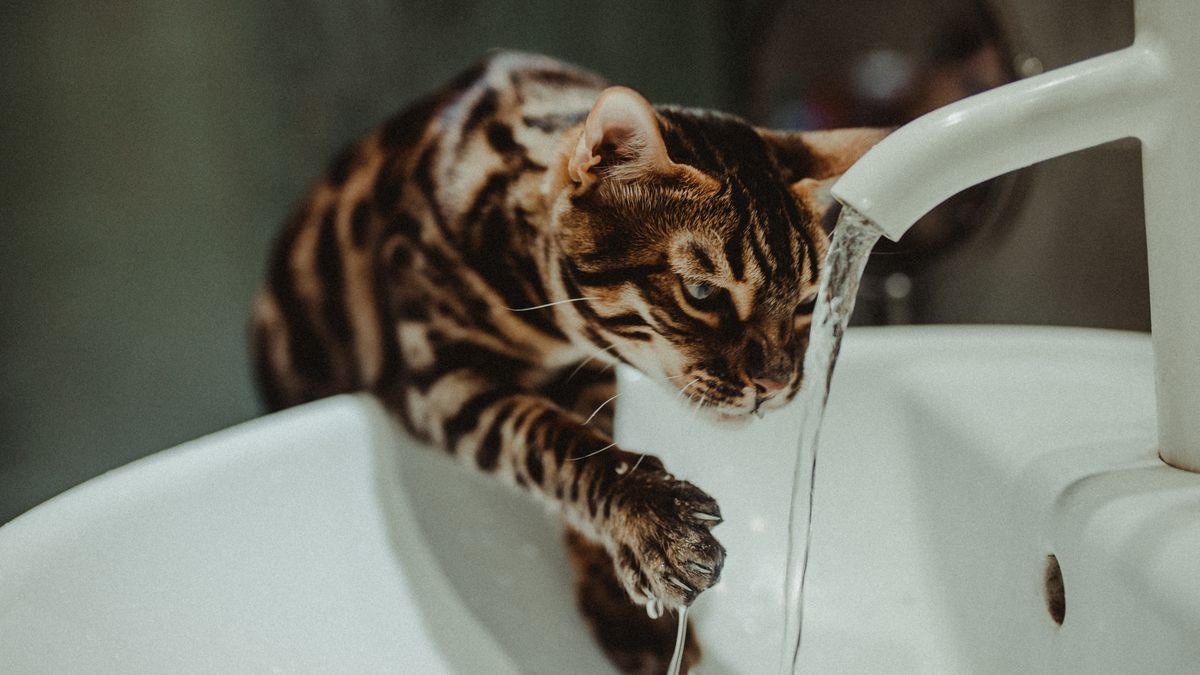
Ranges differ by species and by laboratory; trends over months matter more than any single result.
BUN: the diet- and hydration-sensitive value
Urea nitrogen is a waste product of protein metabolism produced in the liver and cleared largely by the kidneys. Because its production depends on diet and its concentration depends on hydration, a high BUN can mean kidney disease — or simply a high-protein meal, dehydration, or gastrointestinal bleeding. A low BUN is common and usually harmless, though it can follow a low-protein diet or a very sick patient who is not eating.
Creatinine: the muscle-dependent yardstick
Creatinine is produced continuously from muscle metabolism at a rate that is stable for an individual animal. That stability makes it the workhorse of kidney assessment and the anchor of IRIS staging. Its weakness is sensitivity: because of natural reserve, roughly two thirds to three quarters of kidney function can be lost before creatinine climbs above the reference range. By the time creatinine is "high," the disease has usually been present for a while.
Muscle mass adds another wrinkle. A small, frail older cat may have a low baseline creatinine that hides early disease — precisely the patient who benefits most from more sensitive testing. Body condition scoring and weight trends therefore belong in the same chart as the creatinine number.
SDMA: the early warning
SDMA — symmetric dimethylarginine — is a newer marker that correlates well with the glomerular filtration rate and tends to rise earlier than creatinine, often before significant nephron loss accumulates. Labs describe sensitivity gains on the order of months, which matters for interventions that work best early: hydration support, phosphorus control, blood pressure management, and therapeutic diets.
SDMA is not perfect — it must still be interpreted with hydration status, and some non-renal conditions can influence it. But paired with creatinine it has changed how veterinarians talk about "early kidney" in everyday practice. It is one reason international guidelines now emphasize diagnosis before the traditional creatinine threshold is crossed.
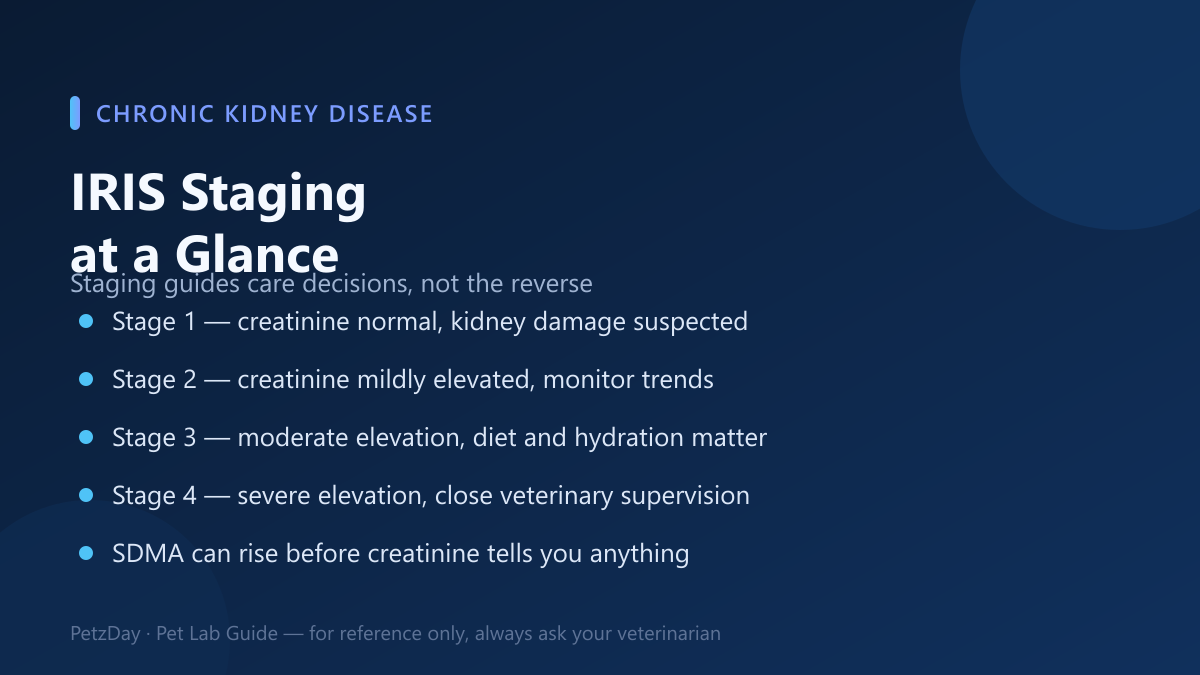
Staging places a patient in the right treatment framework — it never replaces the individual conversation about that patient.
Urine specific gravity: the concentration test
The kidneys spend their days deciding how much water to keep. When a pet is even mildly dehydrated, healthy kidneys should concentrate urine strongly — a specific gravity well above 1.030 in most dogs. Dilute urine in a dehydrated patient is one of the most meaningful findings in all of veterinary medicine, because it directly shows the kidneys failing at their core task.
Conversely, dilute urine in a well-hydrated pet is not automatically disease — but it is a reason to look further, particularly in cats, where diabetes mellitus and hyperthyroidism can produce the same pattern for completely different reasons. Treating "kidney" without checking urine concentration and thyroid status is how treatable diseases get missed.
From values to care
Once the pattern is clear, management focuses on what the data supports: maintain hydration, moderate phosphorus (often through a renal diet), control blood pressure and proteinuria, and monitor trends rather than reacting to single results. Frequent, small data points — a weight, a urine specific gravity, a creatinine — compose the film rather than the photograph. That perspective is exactly why IRIS staging exists.
Kidney medicine is trend medicine. Two numbers over six months outrank one number over one day.
Questions to ask your veterinarian
- How is my pet's hydration status affecting these values?
- Do we have an SDMA result, and what does it add?
- Can the urine concentrate? What was the specific gravity?
- Should we check blood pressure and urine protein?
- What is the monitoring interval — and what change triggers a plan change?
Living well with early kidney disease
Once early kidney disease is identified, the first intervention is unglamorous and effective: keep your pet hydrated and make water the easy choice. Many cats drink more when water is offered in several places, away from food and litter, in wide, clean bowls. Some become enthusiastic about fountains; others simply need fresh bowls twice a day. None of this replaces therapy, but all of it lightens the load on the remaining kidney tissue.
Diet becomes a tool when staging justifies it. Prescription renal diets restrict phosphorus and adjust protein in ways that have been shown in studies to extend good-quality time in cats with kidney disease. The catch is palatability: a diet the patient will not eat helps nobody. Slow transitions, warmed food, and patience are clinical skills in the owner's hands, and your veterinary team will coach you through them.
At home, track what you can: water bowls refilled, appetite, weight, and litter box or accident habits. At the clinic, blood pressure and urine protein checks complete the picture that blood work begins. The combination — home observations plus scheduled labs — catches the two treatable complications of kidney disease (hypertension and protein loss) before they quietly damage other organs.
Keep Every Result in One Place
Results only become a story when you can compare them. PetzDay keeps every lab panel in one timeline you own — so trends stand out, and any clinic can see the full history in a single link.
- New to blood work? Start with the complete guide to dog blood test results.
- Browse more lab value guides, or create a free PetzDay account to keep your own results in one place.
References and further reading
- IRIS — International Renal Interest Society
- Cornell eClinPath — Kidney Biochemistry
- Merck Veterinary Manual — Kidney Diseases
- Tufts Veterinary Nutrition — Diet and Kidney Health