Diabetes Monitoring in Pets: Glucose, Fructosamine, and What Curves Really Show
Blood glucose is just the beginning. Learn how veterinarians combine glucose curves, fructosamine, urine testing, and ketone checks to manage canine and feline diabetes.
Blood glucose in diabetic pets is a moving target — it rises after meals, falls after insulin, and spikes with stress, so a single reading can mislead; vets combine glucose curves, fructosamine, urine testing, and ketone checks to manage the disease.
Diabetes mellitus is one of the most rewarding diseases to manage — once the monitoring strategy makes sense to everyone involved. The challenge is that blood glucose is a moving target: it rises after meals, falls after insulin, spikes with stress, and follows its own daily rhythm. A single reading in the clinic can be dangerously misleading in either direction.
This guide explains the tools veterinarians actually use together — glucose curves, fructosamine, urine dipsticks, and ketone checks — and how they combine into a picture that keeps diabetic pets stable. The principles align with the AAHA diabetes management guidelines used by clinics across North America.
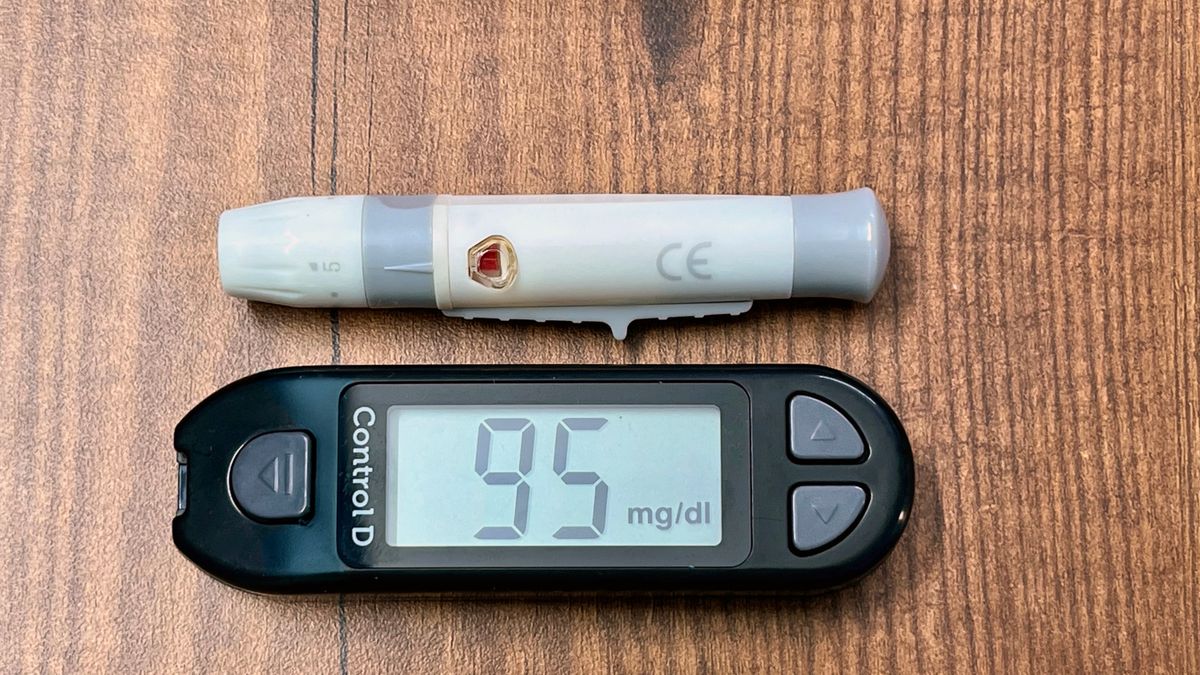
Numbers only mean something alongside clinical signs: thirst, urination, appetite, weight, and energy.
Blood glucose: necessary, but noisy
Glucose is the biomarker everyone knows and the one that misleads most often. In-clinic readings spike with fear — cats are especially famous for "stress hyperglycemia," where a frantic car ride alone pushes glucose into diabetic territory. Even at home, the value after a meal or at the insulin peak means something different from the value before the next dose.
That is why veterinarians interpret glucose in context: the time relative to food and insulin, the trend across the day, and how the pet looks and behaves. Owner-collected home curves, using a pet-specific meter or a continuous glucose monitor, have quietly become one of the biggest quality-of-life improvements in veterinary diabetes care.
Glucose curves and continuous monitors
A glucose curve samples blood every one to two hours across a dosing interval to show the shape of the day: how low glucose dips (the nadir), how high it peaks, and how long insulin lasts. The goal is not "normal" numbers — perfect control is nearly impossible and chasing it invites dangerous hypoglycemia. The goal is a safe, repeatable pattern.
Continuous glucose monitors, borrowed from human medicine, have transformed this process. A small sensor worn on the skin logs glucose every few minutes for up to two weeks, producing a full movie instead of a few snapshots. Stress artifact all but disappears, and insulin adjustments become far more data-driven. Ask your clinic whether they offer this option — availability varies by region.
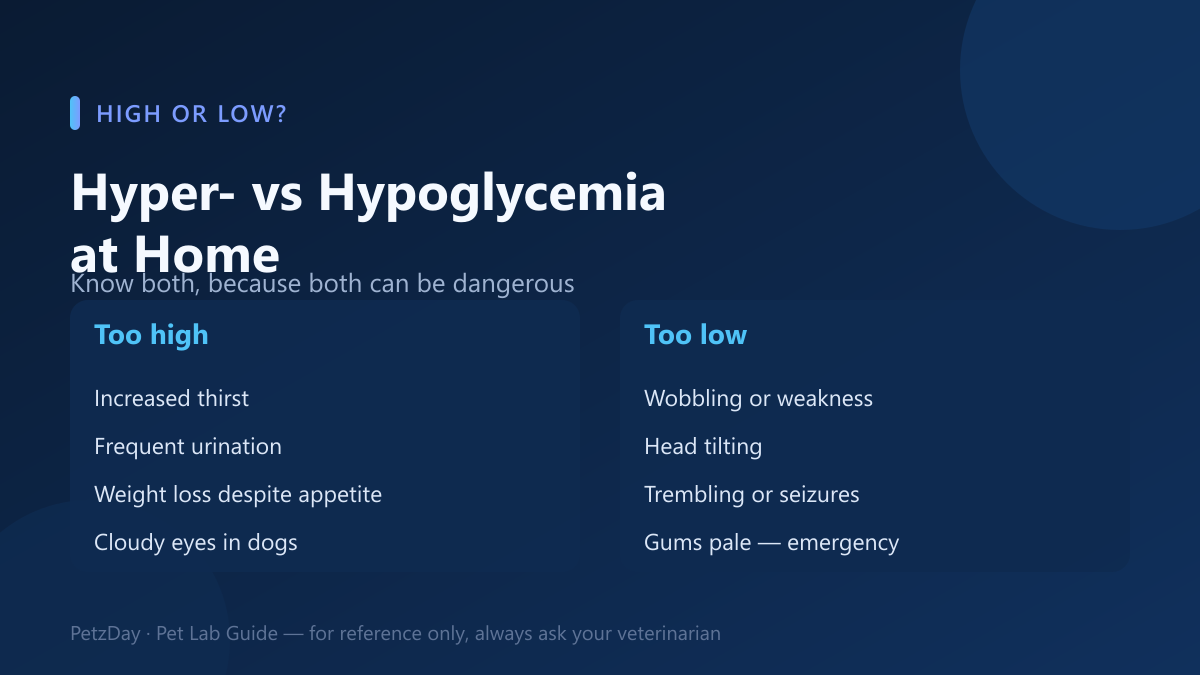
Low blood sugar is the true emergency — keep glucose gel or honey on hand and know the signs.
Fructosamine: the long view
Fructosamine is formed when glucose sticks irreversibly to blood proteins. Because those proteins live for one to three weeks, fructosamine acts as a memory of average glucose over that window — a single number that is not fooled by one stressful morning. In cats, the difference between high fructosamine (persistent hyperglycemia) and normal fructosamine with high clinic glucose (stress) is often the deciding factor in diagnosis.
For monitoring, fructosamine answers a different question than a curve. The curve tells you how the day behaves; fructosamine tells you how the weeks have gone. Used together, they catch both the chronically underdosed pet whose curves look acceptable and the pet whose curves look scary but whose overall control is fine.
Urine testing and ketones
Urine dipsticks for glucose are the cheapest tool in the kit. When blood glucose exceeds the kidney's reabsorption threshold — commonly around 180–220 mg/dL in dogs — glucose spills into urine. Persistent glucosuria means control needs work, even if the pet looks comfortable. But negative urine glucose at home never proves a pet is safe: urine reflects hours of history and can lag behind a dangerous swing.
Ketones are the value that demands same-day action. When a diabetic pet cannot use glucose properly, the body burns fat and produces ketones, which accumulate into diabetic ketoacidosis — a genuine emergency with vomiting, lethargy, and rapid breathing. Ketone test strips or blood ketone meters are inexpensive insurance and belong in the diabetes kit of every cat and dog on insulin.
Reading the whole picture
The modern approach blends data streams: a home glucose curve or flash glucose monitor, periodic fructosamine, ketone checks during illness, and — above all — how the pet is doing. A number that looks odd on paper but comes with a bright, hungry, playful pet carries less weight than a "good" number attached to a lethargic one. Monitoring is a conversation between data and daily life, and pet owners are essential participants in that conversation.
Treat the whole pet: if the numbers and the patient disagree, believe the patient — then recheck the numbers.
Related: Kidney Values 101: BUN, Creatinine, SDMA, and Urine Specific Gravity — the kidney numbers your vet watches alongside glucose.
Questions to ask your veterinarian
- What is our target glucose range, and why?
- Should we try a home glucose curve or a continuous monitor?
- When is the next fructosamine test due?
- Which ketone test should we keep at home?
- What pattern of clinical signs means I should call immediately?
Daily life with a diabetic pet
Insulin works best when life is predictable. Meals at consistent times, injections after meals on a fixed schedule, and reasonable consistency between weekday and weekend are the scaffolding that holds control together. Insulin should be stored cool but never frozen, shaken gently — never vigorously — and discarded per the manufacturer's timeline once opened, because degraded insulin is a common hidden cause of "sudden" poor control.
Know what to do when the scale tips too low. Keep a source of quick sugar on hand, know the signs, and have a plan agreed with your clinic for emergencies. For travel or sitters, leave written instructions including the insulin brand, dose, meal timing, and your veterinarian's phone number. Preparedness is not pessimism; it is what makes months of steady control possible — and it is exactly what a good monitoring partnership looks like.
Keep Every Result in One Place
Results only become a story when you can compare them. PetzDay keeps every lab panel in one timeline you own — so trends stand out, and any clinic can see the full history in a single link.
- New to blood work? Start with the complete guide to dog blood test results.
- Browse more lab value guides, or create a free PetzDay account to keep your own results in one place.
References and further reading
- AAHA — Diabetes Management Guidelines
- Cornell eClinPath — Glucose and Endocrine Testing
- Merck Veterinary Manual — Diabetes Mellitus in Dogs and Cats
- ASPCA — Diabetes in Pets Overview