Thyroid Testing in Pets: T4, Free T4, and TSH — Hyperthyroidism in Cats, Hypothyroidism in Dogs
The same hormone panel points in opposite directions depending on species. Here is how veterinarians untangle thyroid disease in cats and dogs.
Thyroid disease is a study in opposites. In cats, the problem is almost always too much hormone — hyperthyroidism, one of the most common diseases of senior cats. In dogs, it is nearly the reverse: hypothyroidism, a sluggish thyroid that slows metabolism. Same hormone, same tests, opposite direction. No wonder thyroid results confuse even experienced pet owners.
This guide explains what T4, free T4, and TSH measure, why one screens and the others confirm, and why the species-specific reference intervals on eClinPath matter so much.
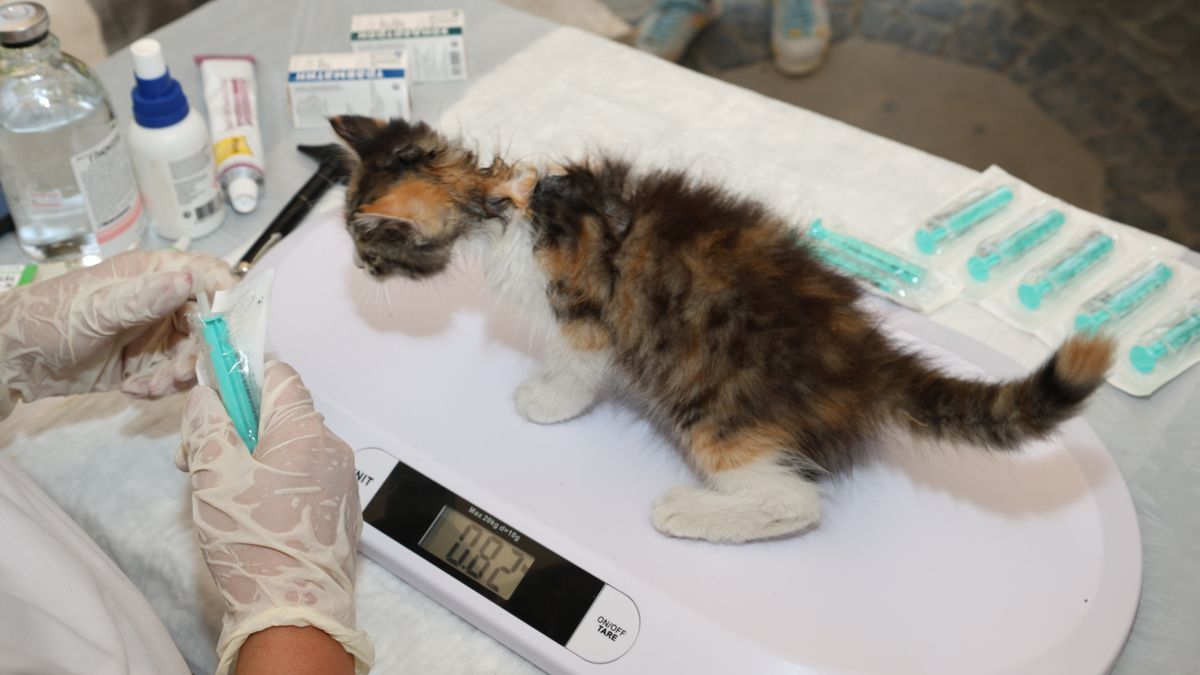
Total T4 is the screening test; free T4 and TSH resolve ambiguous results.
Total T4: the screening workhorse
Total thyroxine (T4) measures all T4 hormone in the blood, whether bound to carrier proteins or floating free. It is cheap, fast, and surprisingly informative at both extremes. Most hyperthyroid cats have elevated total T4, and most hypothyroid dogs have low total T4 — when the clinical signs match, that single value often seals the diagnosis.
The trouble is the middle of the range. A hyperthyroid cat whose value fluctuates into the normal zone (so-called "occult" hyperthyroidism) can slip through, and a hypothyroid dog can look normal for the same reason. On the other side, plenty of genuinely hypothyroid-looking dogs with low T4 turn out to have a normal thyroid: illness, medications, and even obesity suppress T4 without any thyroid disease at all. This phenomenon, called non-thyroidal illness syndrome, is why confirmation tests exist.
Free T4 and TSH: the confirmation pair
Free T4 measures the unbound, biologically active fraction. Equilibrium dialysis — the gold-standard method — is less affected by illness than total T4, making it the go-to confirmatory test in dogs the laboratory "cannot trust yet." In cats, free T4 is most useful when total T4 lands in the gray zone but the clinical picture screams hyperthyroidism.
Thyroid stimulating hormone (TSH) works by feedback logic. A healthy thyroid needs little TSH; when the gland fails, the pituitary shouts louder and TSH rises. In dogs, a high TSH with low T4 is strong evidence of true hypothyroidism — but normal TSH does not fully exclude it, because many hypothyroid dogs keep TSH in the normal range. In cats, TSH testing plays a smaller role.
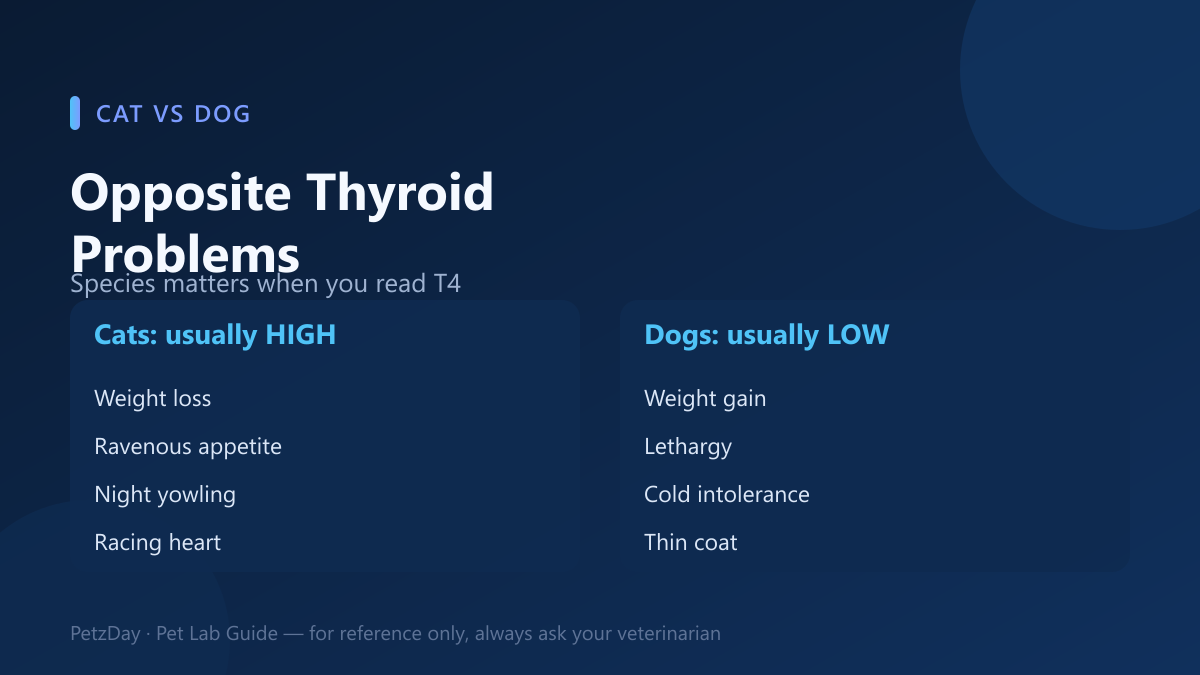
Species flips the direction: cats run high, dogs run low.
Hyperthyroidism in cats
An older cat who is losing weight despite a ravenous appetite, yowling at night, and leaving a messy litter box is a classic picture. Elevated total T4 confirms it; a normal total T4 with strong clinical signs justifies a free T4. The stakes are higher than weight alone: untreated hyperthyroidism strains the heart, drives hypertension, and can unmask or worsen kidney disease after treatment begins.
That last point deserves emphasis. Because hyperthyroidism revs the circulation, it can mask underlying kidney disease. When treatment slows the thyroid, previously hidden kidney values may rise. A thorough veterinarian will run a chemistry panel and urinalysis before or alongside treatment decisions, and monitor both systems afterward.
Hypothyroidism in dogs
At the other pole, a middle-aged dog who is gaining weight on unchanged rations, sleeping more, growing a dull coat, and feeling the cold may have a thyroid that has slowed down. Diagnosis blends clinical signs with a low total T4, a low free T4, and an elevated TSH — plus the discipline to exclude the many look-alikes, from Cushing's disease to simple overfeeding.
Treatment, when warranted, is one of the most satisfying in veterinary medicine: daily supplementation transforms the dog within weeks. But medicating a dog who merely 'looks hypothyroid' without lab confirmation creates a lifetime of unnecessary pills. The tests, done properly, prevent exactly that.
Practical takeaways
Thyroid testing rewards a species-aware, sign-first mindset. Start with total T4 as a screen, escalate to free T4 and TSH when the answer is unclear, and never interpret numbers without the clinical picture. When the results and the patient disagree, retest in four to six weeks — thyroid values drift more than most owners expect.
Thyroid disease looks like its tests only when you look at the whole animal first.
Questions to ask your veterinarian
- Is this a screening test or a definitive one?
- Should we add free T4 and TSH for confirmation?
- Could illness or medication be suppressing the T4 value?
- Have we checked blood pressure and kidney values?
- When should we retest to confirm the response to treatment?
Treatment monitoring: the recheck plan
For hyperthyroid cats, treatment choices — daily medication, radioiodine, or a prescription diet — each come with their own monitoring schedule and trade-offs. Medication usually rechecks T4 and kidney values about a month after starting and then every three to six months once stable. The timing of the sample relative to the pill matters, and clinics standardize it deliberately; free-fed cats complicate the diet option more than the others.
For hypothyroid dogs on levothyroxine, the recheck typically happens four to eight weeks after a dose change, with blood drawn at a consistent time relative to the tablet. The doctor watches both the numbers and the dog: a coat regrowing, weight heading toward target, play returning. Over-supplementing pushes a dog into hyperthyroid territory — restless, panting, losing weight — which is why "more" is not better.
Kidney values get a starring role in the conversation either way. In cats, the post-treatment picture often reveals what hyperthyroidism was hiding, and adjustments follow. In both species, the goal is not a textbook number but a patient who feels well, maintains a healthy weight, and tolerates a sustainable routine. Goals you can actually keep are the only ones that work long term.
Keep Every Result in One Place
Results only become a story when you can compare them. PetzDay keeps every lab panel in one timeline you own — so trends stand out, and any clinic can see the full history in a single link.
- New to blood work? Start with the complete guide to dog blood test results.
- Browse more lab value guides, or create a free PetzDay account to keep your own results in one place.
References and further reading
- Cornell eClinPath — Endocrine Testing
- Merck Veterinary Manual — Thyroid Disorders
- VCA Animal Hospitals — Hyperthyroidism in Cats
- American College of Veterinary Internal Medicine