Traveling with Dogs: Health Certificates, Vaccines, and How to Prevent Lost Pets
The veterinary and paperwork side of traveling with a dog — vaccines, microchips, domestic and international health certificates, the CDC import form — plus a practical plan for keeping a dog from getting lost in an unfamiliar place.
Almost every travel disaster with a dog comes from one of three failures: the dog was not eligible to travel, the paperwork was wrong, or the dog got loose in a place where nobody knew its name.
The first two are scheduled problems. They are solved with a vet visit four to six weeks before departure and a folder of documents. The third is the one owners underestimate, because a dog who has perfect recall at home is a different animal in a hotel parking lot at night.
This post contains affiliate links. If you buy through them, PetzDay may earn a commission at no extra cost to you. It is general information, not veterinary advice for your dog.

A pre-trip exam is the cheapest insurance a trip has. Photo: Nenad Stojkovic / Wikimedia Commons (CC BY 2.0).
The four-week vet checklist
Book the appointment as soon as the trip is real, and say "travel" when you make it. The visit is different from a wellness check because it has to produce documents.
- A physical exam. The vet is confirming the dog is healthy enough to travel, not just vaccinated.
- Rabies vaccination and a certificate. The certificate needs the vaccine date, lot number and expiry, and the administering veterinarian. Carry the paper copy.
- Core vaccines up to date. Distemper, parvovirus, adenovirus and parainfluenza are the baseline; bordetella is worth discussing if the dog will be boarded, at daycare or in crowded dog areas.
- Parasite prevention matched to the destination. Heartworm, fleas and ticks are regional. A dog on a monthly product at home may need a different one for a month elsewhere.
- A health certificate if the destination or airline requires one. Ask the clinic whether they have a USDA-accredited veterinarian if you are crossing a border.
- A medication plan. Bring enough for the trip plus two days, in the original packaging, and ask for a written prescription in case you need a refill away from home.
- A motion-sickness plan if the dog has a history. Prescription medication exists; human anti-nausea drugs are not interchangeable.

ARCA PET Cat & Dog First Aid Kit for Car - Pet Emergency Kit for Home Office Travel
Compare kits on AmazonAs an Amazon Associate we earn from qualifying purchases.
Time the vaccines at least two weeks before travel. A dog who is sore or mildly febrile from a vaccine the day before a flight is a dog who may be denied boarding.
Microchips: the identification that survives
A collar tag is the fastest way home and the easiest thing to lose. A microchip is the opposite: invisible, permanent, and only useful if it is registered and the registry has your current phone number.
Three things to check before a trip:
- The chip scans. Ask the clinic to scan it during the pre-trip exam and confirm the number matches your paperwork. A chip that has migrated or failed is rare, but you want to know before you are at a shelter counter.
- The registry is current. Update your mobile number and add a second contact who will answer while you are traveling. If you change your number for an international trip, update the registry before you go.
- The standard matches the destination. The U.S. accepts chips readable by a universal scanner. Many other countries require an ISO 11784/11785 chip, which is the 15-digit standard most U.S. chips already use — but confirm before an international trip.
Health certificates: domestic and international are different problems
Domestic travel
APHIS does not regulate interstate movement of pets by their owners. The destination state does, and requirements vary: some ask for a health certificate, some for vaccination proof, some for testing. Airlines may also require a health certificate for checked pets, commonly issued within 10 days of travel.
For a normal road trip, the practical kit is the rabies certificate, vaccine dates and a recent photo. For a move or a long stay, check the destination state's animal health office before you leave.
International travel
This is a USDA-accredited veterinarian process, not a regular clinic visit:
- The destination country sets the rules. Common requirements include a rabies vaccination, a microchip, a health certificate endorsed by USDA APHIS, and sometimes a rabies antibody titration (titer) test from an approved laboratory.
- The EU requires a microchip, a current rabies vaccination and an EU health certificate, and applies a waiting period after a first rabies vaccination. Some destinations add parasite treatment; check the country's page, not a blog.
- Some rules are new and easy to miss. Mexico, for example, has required a New World Screwworm inspection certificate for pet dogs since August 3, 2026, signed by a USDA-accredited veterinarian and issued no more than five days before arrival.
- Start early. A titer test can add weeks. Countries with quarantine add months.
Returning to the United States
CDC rules apply to every dog entering or returning to the U.S., including U.S. dogs coming home:
- At least six months old.
- Apparently healthy on arrival.
- A microchip readable by a universal scanner.
- A receipt for the free CDC Dog Import Form, completed online before travel. The receipt is valid for multiple entries from the same country for six months.
- Additional requirements if the dog has been in a high-risk country for dog rabies in the previous six months. For U.S.-vaccinated dogs, that includes a Certification of U.S.-Issued Rabies Vaccination submitted by a USDA-accredited veterinarian before the dog leaves the U.S. Foreign-vaccinated dogs face a different path, usually involving an approved rabies serology test.
The high-risk list is not intuitive. Check it directly on the CDC site rather than assuming a country is low-risk because it is popular with tourists.
The document folder
Keep these together, on paper and on your phone:
- Rabies certificate with lot number and expiry.
- Vaccine history with dates.
- Health certificate (if required) and any USDA endorsement.
- CDC Dog Import Form receipt (for re-entry).
- Prescriptions and a medication list with doses.
- Microchip number and registry phone number.
- Vet contact at home, plus one emergency clinic near your destination.
- A recent photo of the dog, and one of you together.
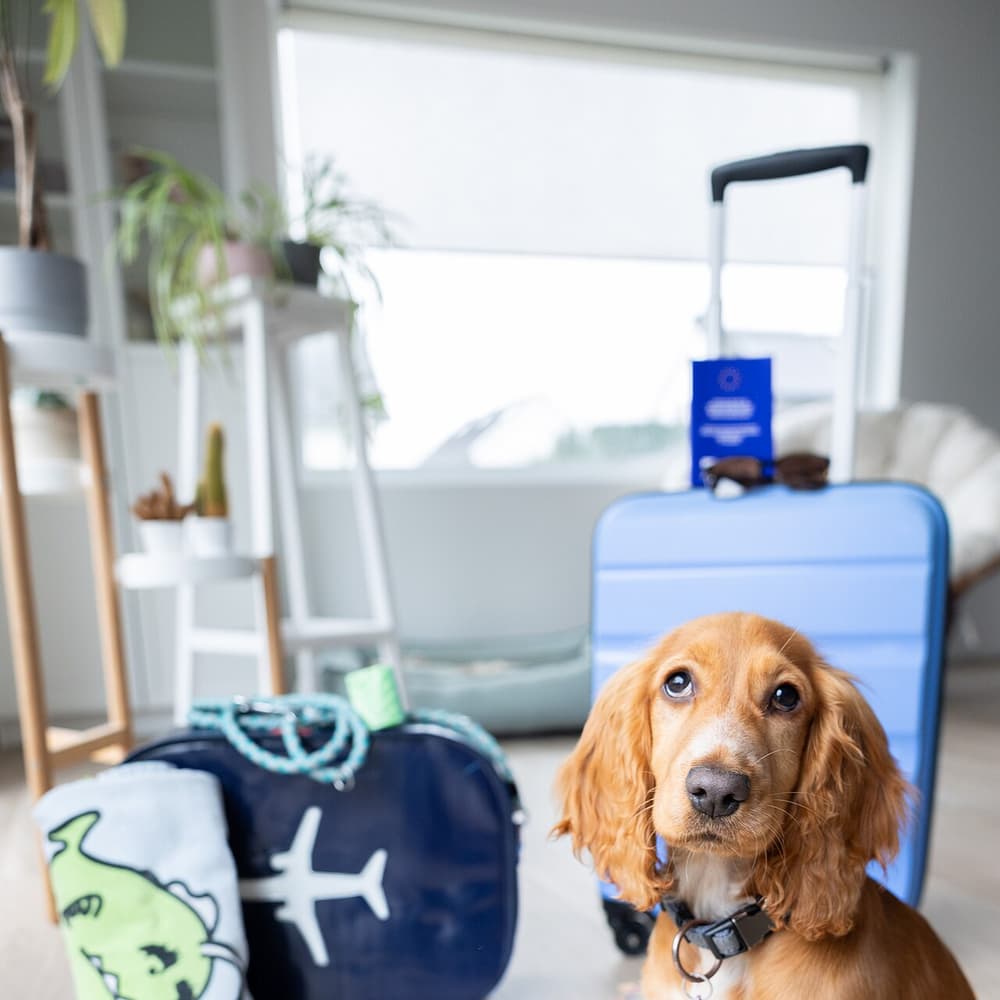
The paperwork is boring until it is the only thing standing between your dog and a denied flight. Photo: European Commission / Wikimedia Commons (CC BY 4.0).
Preventing a lost dog
Before you go
- Two tags. One with your mobile number, one with a travel contact or "reward" line. Tags fall off; two is the minimum.

GoTags Stainless Steel Pet ID Tags, Personalized Dog Tags and Cat Tags
Compare ID tags on AmazonAs an Amazon Associate we earn from qualifying purchases.
- A registered microchip. Covered above. It is the backup that does not fall off.
- A tracker with a realistic understanding of what it does. GPS trackers such as Tractive or Fi give live location, but they require a subscription and charging. Bluetooth trackers like AirTag rely on nearby phones and are not live GPS. Neither replaces a leash.
- A recent photo set. Front, both sides, and a close-up of any distinguishing mark.
- Recall practice in distracting places. Practice in a park, a parking lot and a busy street before you rely on it in a new city.

Halo Collar 5 Wireless Dog Fence System, GPS Tracking & Activity Insights
Compare trackers on AmazonAs an Amazon Associate we earn from qualifying purchases.
During the trip
- Leash on before the car door opens. Every time. A dog who bolts from a hotel room into a corridor can reach a parking lot in seconds.
- Block the exit routine. In a strange room, put the dog in the crate or on a leash before housekeeping opens the door.
- Do not tie the dog outside a shop. It takes seconds for a dog to be stolen or frightened into slipping a collar.
- Tell the sitter or front desk what to do if the dog gets out. Name, photo, microchip number, your phone number, and the instruction to call you before chasing.
- Keep the dog's routine. Feeding, walks and sleep at roughly the same times reduces the anxiety that leads to bolting.
If your dog goes missing
The first hour matters more than the first day.
- Search the immediate area on foot, calmly. Call the dog's name, stop, and listen. A frightened dog may not come when called but may whimper or move.
- Tell every person nearby. Front desk, parking attendants, dog walkers, delivery drivers. Give them the photo and your number.
- Call local shelters and animal control. Give them the microchip number and a description. Ask whether they have a lost-pet report line.
- Flag the microchip as lost. Call the registry and ask them to mark the chip as missing so a clinic or shelter that scans it calls you.
- Post in local groups and the neighborhood app. Include the photo, the last seen location and time, and a phone number — not your home address.
- Put up posters within a one-mile radius. Large print, photo, phone number, "do not chase, call." Laminating or taping them inside a plastic sleeve buys a day of weather.
- Leave a scent station. An unwashed shirt and the dog's bed near the last seen spot can hold a dog in the area.
- Do not chase a frightened dog. Sit down, turn sideways, toss treats behind you and let the dog come to you. Chasing pushes a scared dog further.
- Use a lost-pet database. Petco Love Lost is free and uses facial recognition on photos; local shelters and Facebook groups are still where most reunions happen.
The single biggest predictor of a reunion is a current microchip number and a phone that gets answered.
Keep the records in one place
Travel is when records matter most and are hardest to find: the vaccine date a border agent asks for, the medication dose a sitter needs, the name of the clinic that saw the dog two states ago. PetzDay keeps a pet profile with vaccine records, medications, lab results and vet contacts, free, so the next question takes seconds instead of a search through email.
Start at petzday.com/register. Before a trip, also print the free pet emergency card and put it in your wallet: it lists the dog's medications, allergies and emergency contacts for the person who finds you in a crisis.
For the rest of the planning, start with the complete guide to traveling with dogs. If you are flying, the airline fee and cabin-rule comparison covers the carrier and the CDC form at the gate; if you are driving, the road trip checklist covers restraint and rest stops.
FAQ
Do I need a health certificate to travel with my dog in the U.S.?
Not usually for a road trip, but destination states can require one, and airlines may require one for checked pets. For international travel, a USDA-endorsed certificate is standard.
How long before travel should my dog get vaccinated?
At least two weeks, and longer for a first rabies vaccination if you are entering a country with a waiting period. Do not schedule vaccines for the day before departure.
Is a microchip enough to get my dog back?
Only if it is registered and the contact details are current. A microchip is a number, not a GPS. Pair it with a visible tag and, if you travel often, a tracker.
Can I use an AirTag instead of a GPS tracker?
An AirTag is a Bluetooth device that relies on nearby Apple devices. It can help in a city and fail in a forest or a rural rest stop. A GPS tracker with a subscription is the tool for live location, and neither replaces a leash.
What happens if my dog's rabies vaccine expires during the trip?
For re-entry to the U.S. from a high-risk country, a valid vaccination and the required certification are part of the entry requirements. Check the dates before you leave, and renew early if the trip crosses the expiry.
Do service dogs need the same paperwork?
Service dogs are exempt from pet fees and many pet restrictions, but they are not exempt from entry requirements. CDC's import rules apply to dogs, including service dogs, entering the U.S.
References
- CDC — Bringing a dog into the U.S.
- CDC — CDC Dog Import Form and instructions
- CDC — High-risk countries for dog rabies
- APHIS — Travel with a pet
- APHIS — Interstate movement of pets
- APHIS — Pet travel from the U.S. to Mexico
- European Commission — Dogs, cats and ferrets: movement rules
- VCA Hospitals — Microchipping your dog
- VCA Hospitals — Motion sickness in dogs
- Tractive — How GPS dog tracking works
All web sources accessed November 2026. Entry requirements change; confirm with CDC, APHIS and the destination country before booking.
Last reviewed: November 10, 2026. This article is for general information and does not replace veterinary advice for your dog.