Road Trip with Your Dog: 15 Essentials You Actually Need
A practical road-trip packing list for dogs: the two safety rules that matter more than any product, how to handle motion sickness, a sane rest-stop rhythm, and 15 items that earn their space in the car.
A road trip is the easiest way to travel with a dog and the easiest way to hurt one. The difference is not a longer packing list. It is two decisions made before the car moves: where the dog rides, and what holds the dog in place.
Everything else on this list supports those two decisions. The gear is useful, but a car full of products with a dog loose on the front passenger seat is still the riskiest version of the trip.
This post contains affiliate links. If you buy through them, PetzDay may earn a commission at no extra cost to you.
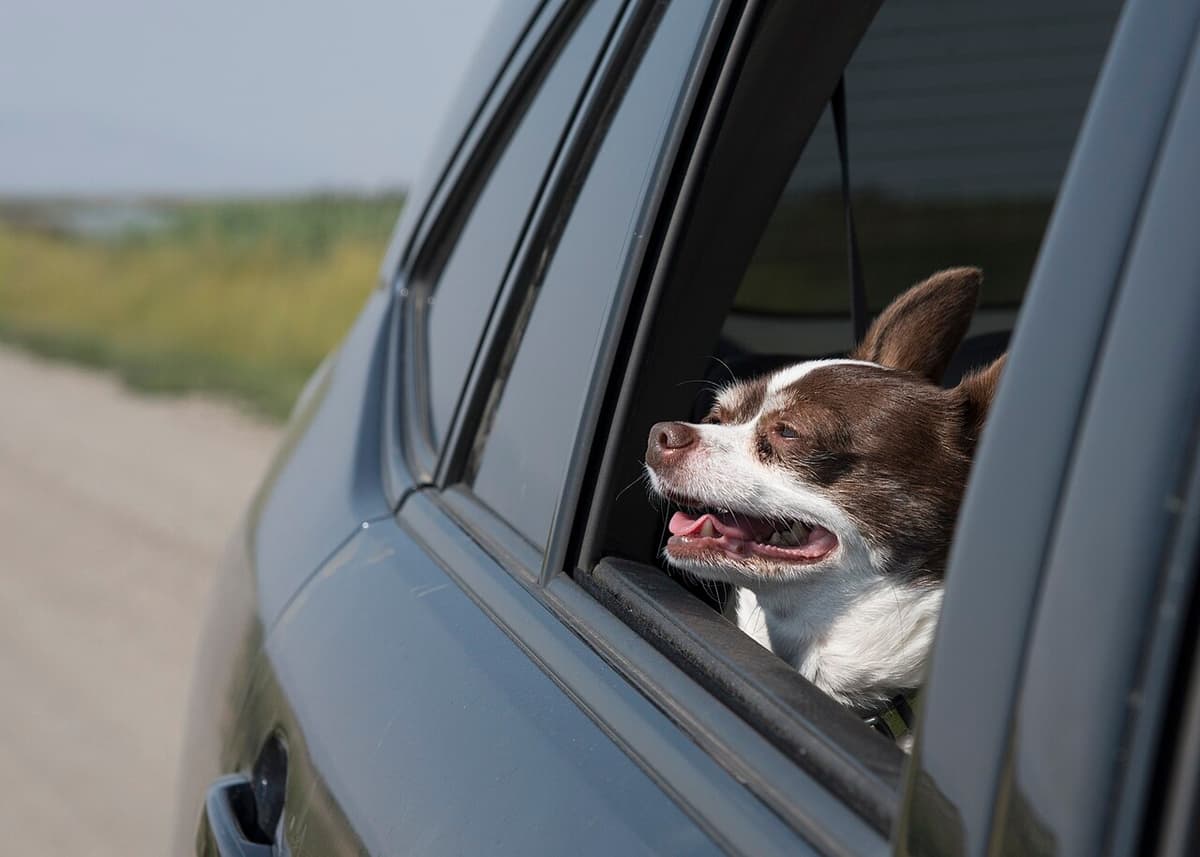
A dog enjoying the window on a rural road. Photo: U.S. Fish and Wildlife Service Mountain-Prairie / Wikimedia Commons (CC BY 2.0).
Rule one: the dog rides in the back
The front passenger seat is the worst place in the car for a dog. A passenger airbag deploys at roughly 100–200 mph, aimed at the chest of an adult human. A dog sitting there takes that force at close range, and a small dog can be seriously injured by an airbag in a low-speed crash.
The back seat is not automatically safe, either:
- Center back seat is the furthest from impact points, if the seat belt setup allows it.
- Behind the front passenger is a reasonable compromise in most cars.
- Cargo area is acceptable only if the crate is secured and the area is ventilated; a loose crate in a hatchback becomes a projectile.
Rule two: restraint, not a leash clipped to a collar
A seat belt loop clipped to a walking harness is not a crash restraint. In a 30 mph crash, an unrestrained 40-pound dog hits the seat in front with roughly the force of a small car. The leash and the collar are the failure points.
There are two workable approaches:
- A crate that is secured to the vehicle. Use the seat belt through the crate's handle or a proper tie-down, and leave enough room for the dog to stand and turn. The Center for Pet Safety's crate testing shows how much variation exists between products; a cheap crate can come apart in a crash.
- A harness that has been crash-tested. Look for a published test standard and a size chart based on chest girth and weight, not just weight. Most harnesses sold as "car harnesses" have not been tested.
Whichever you choose, test it on a short drive before a long one. A dog who panics in a crate at 20 mph will not settle at 70.
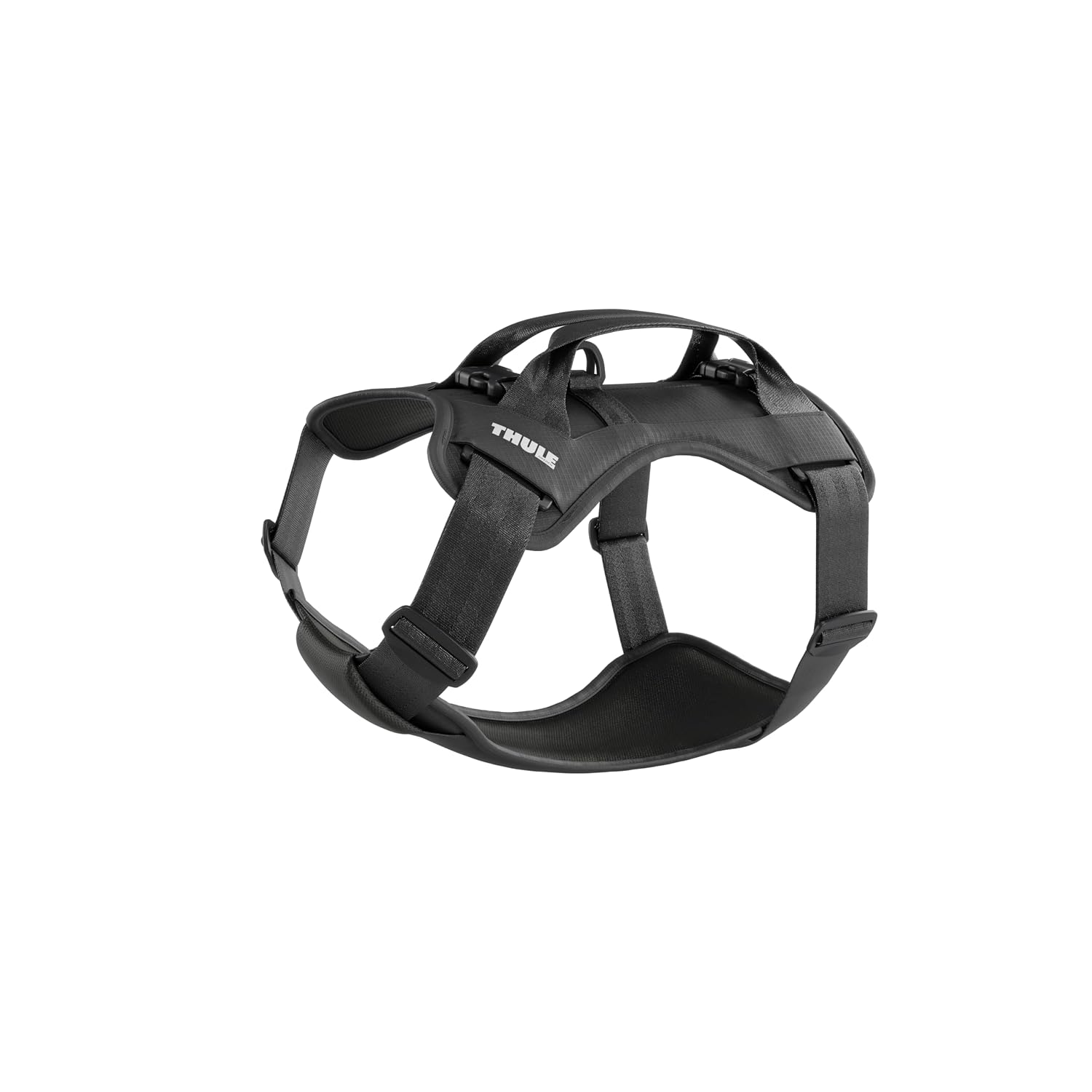
Thule Cappy Dog Harness M, Seatbelt Passthrough, Leash Loop, Step-in Design
Compare harnesses on AmazonAs an Amazon Associate we earn from qualifying purchases.
A booster seat is a comfort product, not a safety product. It lifts a small dog so it can see out, which reduces motion sickness for some dogs — but nothing about a booster seat holds a dog in a crash. Only use one with a crash-tested harness that attaches to the car's seat belt, and never in a seat with an active front airbag.

Lealchum booster seat for small dogs
Check price on AmazonAs an Amazon Associate we earn from qualifying purchases.
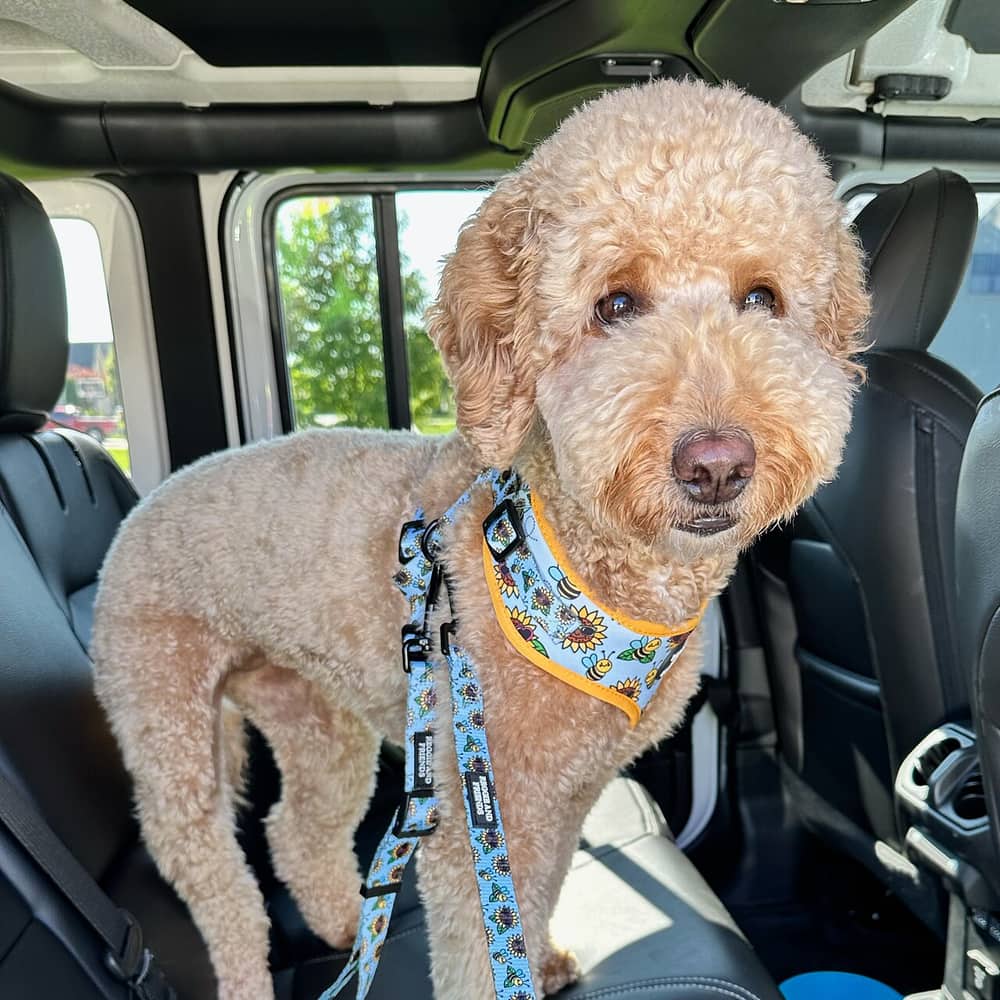
A harness in the back seat is the starting point; it still needs to be a crash-tested design, not a walking harness. Photo: ReggieandFriends / Wikimedia Commons (CC BY-SA 4.0).
Motion sickness: plan before you pack
Car sickness is common in puppies and often improves by about a year of age, according to VCA Hospitals. In adult dogs it is often anxiety plus a lack of conditioning, not a stomach problem.
What helps:
- Build tolerance in short sessions. Sit in the parked car with the engine on, then back out of the driveway, then circle the block. Reward calm behavior and stop before the dog panics.
- Withhold food for a few hours before a long drive. VCA suggests up to eight hours for dogs prone to nausea; always offer water.
- Keep the car cool and quiet. Crack the windows, skip the heavy bass, and put a familiar blanket in the crate.
- Ask your vet about medication for genuine motion sickness. Prescription options exist. Do not use human anti-nausea drugs, and do not sedate a dog for a long drive without veterinary guidance.
Signs to watch for: drooling, lip licking, whining, pacing, vomiting, and unusual lethargy.
The 15 essentials
Safety and restraint
- A crash-tested harness or a secured crate. The one item worth spending real money on.
- A back seat cover or hammock with a grippy backing. It keeps the dog from sliding on leather and protects the seat from mud, hair and accidents.
- A spare leash and a slip lead. The slip lead is for the moment you need to move a frightened dog without touching a collar.
- A window shade or mesh screen. Sun on one side of the car for six hours is a welfare problem, not a comfort preference.

URPOWER Dog Car Seat Cover for Back Seat, 100% Waterproof Hammock for Car
Compare seat covers on AmazonAs an Amazon Associate we earn from qualifying purchases.
Water and food
- A water bottle with a built-in trough. One hand for the bottle, one for the leash.
- A collapsible bowl. For hotel rooms, rest stops and campgrounds.
- Food in a sealed container with a measuring scoop. Keep the dog's normal food and normal portion; a sudden diet change on the road causes diarrhea.
- Treats that take time to eat. A frozen stuffed toy or a long-lasting chew buys you a quiet hour.

Dog Water Bottle with Food Container & Poop Bag Holder & Filter
Compare bottles on AmazonAs an Amazon Associate we earn from qualifying purchases.
Health and records
- A first aid kit for dogs. Gauze, self-adhesive wrap, saline, tweezers, a tick remover, and a digital thermometer are the core.
- Medications in the original packaging. Include the prescription label and enough for the whole trip plus two days.
- Vaccine records and the rabies certificate. Campgrounds, boarding facilities and border crossings ask for them. A photo on your phone is better than nothing; the paper certificate is better.
- Parasite prevention appropriate to the destination. Ticks and heartworm risk are regional. Ask your vet before you leave, not after you find a tick.
Identification and cleanup
- A collar tag with your mobile number. Add a second tag with a travel contact if you will be switching SIM cards.
- A GPS tracker or a registered microchip — ideally both. A microchip is permanent but passive; a tracker is active but needs charging and, for most brands, a subscription.
- Poop bags and a small trash bag. A sealed bag in the car beats a bag on the floor mat.
The rest-stop rhythm
A workable rhythm for a long day:
- Stop every two to three hours. Not just for the dog — driver fatigue is the bigger risk.
- Walk for 10–15 minutes at each stop. Sniffing is enrichment; a quick pee break is not enough for a dog who has been lying down for three hours.
- Offer water at every stop, but do not let the dog gulp a bowl right before getting back in. Small amounts, more often.
- Never leave the dog in a parked car. Even in mild weather, a car in the sun heats up fast. If you need to eat, choose a drive-through or a patio, not a parking space with the windows cracked.
- Do the last stop 30–45 minutes before the hotel. A short walk before check-in makes the first hour in a strange room much easier.
What to skip
- A hammock with no structure. Fabric stretched across the seat is better than nothing, but it does not restrain the dog.
- A "car seat" that hooks over the headrest and hangs. It keeps a small dog contained, not safe.
- Human sunscreen and human medications. Zinc oxide is toxic to dogs, and human pain relievers are not interchangeable with veterinary ones.
- A full grooming kit. Unless the dog is competing, a towel and a brush are enough.
Arriving at the hotel
The first ten minutes in a new room set the tone. Walk the dog before check-in, bring the crate in first, put down the blanket from home, and show the dog the water bowl. Then leave the room for five minutes and come back — a small rehearsal for the first time you leave for dinner.

28" L Collapsible Dog Crate for Dogs, Heavy Duty Dog Kennel Indoor
Compare crates on AmazonAs an Amazon Associate we earn from qualifying purchases.
If you have not booked yet, the pet-friendly hotel guide explains how to compare pet fees and what to ask before you pay. If this is a longer trip, the complete guide to traveling with dogs puts the driving decision next to flying and train travel. And if your dog takes daily medication, the free medication schedule generator produces a printable checklist for the person watching the dog while you are out.
Keep the rabies certificate, vaccine dates and medication list in one place before you leave — PetzDay is free for that, and the profile opens without a signal. Start a pet profile, or browse the article library for the rest of the trip planning.
FAQ
How often should I stop on a road trip with a dog?
Every two to three hours is a reasonable default for an adult dog. Puppies, senior dogs and dogs recovering from illness need shorter intervals. Build the stops into the route instead of hoping the dog sleeps through.
Is it legal to drive with a dog on my lap?
In most U.S. states there is no specific law against it, but it is a distraction offense in some jurisdictions and a serious safety problem everywhere. A dog on your lap can interfere with steering and be crushed by the airbag or your body in a crash.
Can I leave my dog in the car while I eat?
Not safely. Parked cars heat up quickly even on mild days, and a dog in a hot car can develop heatstroke in minutes. Choose a drive-through, a patio or a hotel that allows dogs in the lobby.
What should I do if my dog gets carsick?
Stop feeding a few hours before travel, keep the car cool, and condition the dog with short rides. If it continues, ask your vet about prescription motion-sickness medication. Do not use human drugs.
Do I need a health certificate for a road trip?
Not for most domestic trips, but destination states can require documentation, and campgrounds and boarding facilities often ask for rabies proof. Carry the rabies certificate and keep vaccine dates on your phone.
References
- Center for Pet Safety — Crash test results for crates, carriers and harnesses
- VCA Hospitals — Motion sickness in dogs
- VCA Hospitals — Microchipping your dog
- National Park Service — Pets in parks
- APHIS — Interstate movement of pets
- Amtrak — Pets on trains
All web sources accessed November 2026.
Last reviewed: November 10, 2026. This article is for general information and does not replace veterinary advice for your dog.