Senior Dog Blood Panels: What They Check & What to Watch
A senior dog blood panel is routine screening for older dogs — usually a CBC, a blood chemistry panel, and a urinalysis. Here's what each result means, why high ALP and urine protein get flagged, and what panels typically cost.
A senior dog blood panel is a screening set of lab tests — a complete blood count (CBC), a blood chemistry panel, and usually a urinalysis — that finds organ and blood changes in older dogs before symptoms appear. Senior dogs should see a vet at least twice a year with blood and urine testing built in (AAHA, 2023; Merck; VCA); a typical panel costs roughly $130–$300 at a U.S. general practice.

Regular panels give your vet a baseline — so future changes are easier to spot.
What's included in a senior dog blood panel
A senior dog blood panel has three building blocks: a CBC, a chemistry panel, and usually a urinalysis, plus add-ons like thyroid testing when your vet thinks they help (AAHA, 2023; VCA). Some clinics say canine senior blood panel or dog senior blood panel — same thing.
- CBC: counts red cells, white cells, and platelets; a baseline makes age-related anemia and inflammation easier to read (eClinPath).
- Liver values (ALT, ALP, GGT): look for liver injury and bile-flow changes; ALP drifts upward and has many sources, so vets read the trend. Our liver enzymes guide decodes each value.
- Kidney values (BUN, creatinine, SDMA): show how well the kidneys filter; dogs compensate well, so early changes are easy to miss. Our kidney values guide explains them.
- Glucose and electrolytes: sugar and salts; diabetes risk rises with age, and electrolytes shift with dehydration or kidney problems.
- Thyroid (T4), usually an add-on: weight gain, low energy, and coat changes can look like "just getting old," so vets test rather than guess.
- Urinalysis with a UPC when protein is found: concentration, infection clues, and protein leak; protein in urine is often the earliest sign of kidney trouble (IRIS, 2026; Merck).
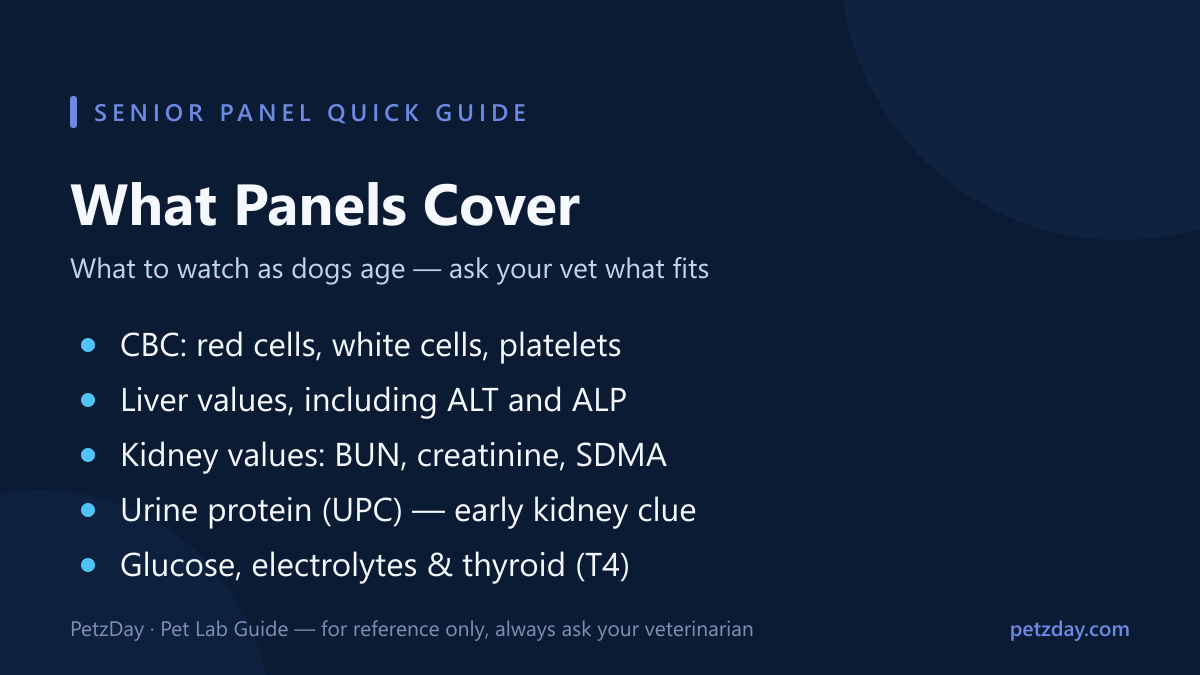
The core of a senior panel — ask which tests fit your dog.
High ALP in senior dogs
A high ALP is one of the most common findings on senior dog blood work — and one of the least specific. ALP can be influenced by many factors, including induction by corticosteroids in dogs, so vets read a mildly high result with the exam, the rest of the panel, and past results (eClinPath; AAHA, 2023).
- Bile flow and liver disease: ALP and GGT are "cholestatic" enzymes tied to bile ducts; when both rise, the liver gets a closer look (eClinPath).
- Hormonal conditions: cortisol excess, including Cushing's disease, is a classic driver of stubbornly high ALP (eClinPath).
- Medications: steroids are the best known, but there are many; bring your dog's medication list to the visit.
- Age-related drift: many older dogs simply run higher than at age three, which is why earlier results matter.
Next steps depend on how high ALP is, whether other values moved with it, and whether your dog has signs. Your vet may repeat the test, add a bile acids test, or use imaging; that's a workup plan, not a diagnosis from one number.
Protein in urine in senior dogs
Protein in urine — proteinuria — means protein that should stay in the bloodstream is leaking through the kidney's filters. In senior dogs it can be an early sign of kidney disease or high blood pressure, sometimes before blood values change (IRIS, 2026; Merck).
A dipstick reading is only a hint. Vets usually confirm with a urine protein:creatinine (UPC) ratio — the test IRIS guidelines use, alongside blood pressure, to stage and monitor kidney disease (eClinPath; IRIS, 2026) — and often repeat the sample, since collection or inflammation can skew one reading.
Why it shows up in older dogs:
- Kidney wear or glomerular disease: damaged filters become leaky.
- High blood pressure: a cause and a consequence of kidney problems.
- Infections or inflammation, in the urinary tract or elsewhere.
- Temporary causes: why vets repeat the test instead of reacting to one result.
Catching it early matters: protein can be the first measurable abnormality while creatinine still looks fine, and leaked protein can contribute to ongoing kidney damage (IRIS, 2026). If protein is found, ask whether a blood pressure check and a recheck UPC are planned; what it means is your vet's call.
How often — and what it costs
Most guidance points the same way: senior dogs should be examined at least twice a year, with blood and urine testing at least yearly for healthy dogs and more often for dogs with conditions or medications (Merck; VCA; AAHA, 2023).
"Senior" is commonly defined as the last 25% of a dog's expected lifespan: about five to six years for giant breeds and 10 to 12 for small breeds (VCA). Many vets start routine panels around middle age:
- Healthy senior: exam every six months; bloodwork at least yearly.
- Chronic condition or medication: often every three to six months.
- New symptoms: don't wait for the routine visit.
What a senior dog blood panel costs varies with clinic, region, and tests included. As a rough U.S. range, a CBC plus chemistry panel commonly runs about $130–$300 at a general practice; a urinalysis, thyroid level, or UPC pushes the total up, and specialty hospitals often charge more — see our dog blood test cost guide. [VERIFY: confirm current market ranges and multipliers before publishing.]
Symptoms & when to worry
A panel is screening; these signs mean book an exam now, not at the next routine visit:
- Not eating for 24 hours, or an appetite fading over several days
- Weight loss — sudden, or a steady slide over weeks
- Unusual lethargy, weakness, or trouble getting up
- Drinking and urinating far more than usual
- Repeated vomiting or diarrhea
- Collapse, pale gums, trouble breathing, or a seizure — call an emergency hospital right away
These signs overlap with many conditions; only your vet can sort out what's going on (Merck; VCA). When in doubt, call.
Why trends matter more with age
With age, the direction a value moves matters more than any single result: a creatinine or ALP that's "still in range" but climbing can be the earliest hint of change (IRIS, 2026; Merck).
A simple tracking rhythm that works for most senior dogs:
- Every visit: keep a copy of the lab report, with the date.
- At least yearly (or as advised): a full senior panel, blood plus urine.
- Weekly: weight on the same scale, plus notes on appetite, water, and energy.
- Anytime something changes: note it with the date so your vet sees a pattern.
- At every recheck: compare today's numbers with the last set.
Senior care is a long game: years of rechecks and small adjustments. That history scatters easily — a lab PDF here, a phone photo of a printout there, a symptom story only you remember. Emergencies at 2 a.m. go better with the whole record on one screen.
PetzDay keeps that history: log results, symptoms, and medications by date, and pull up the trend when your vet asks. It isn't a replacement for your vet's records — just your side of the story. Create a free PetzDay account, or browse our full library of plain-English guides.
FAQ
How much does a senior dog blood panel cost?
At U.S. general practices, a senior panel commonly runs about $130–$300, depending on the clinic, region, and tests included. A urinalysis, thyroid level, or UPC ratio adds to the total, and specialty hospitals charge more. Ask for an itemized estimate.
Is a high ALP in a senior dog serious?
Not automatically. In dogs, ALP can reflect bile-flow problems, hormones like cortisol, medications, and other tissues, so vets read it with the rest of the panel and your dog's history (eClinPath). A mild, stable increase in a well dog is often monitored — how serious it is for your dog is your vet's call.
What age is a dog considered a senior?
Most vets use the last 25% of expected lifespan: about five to six years for giant breeds, 10 to 12 for small breeds (VCA). Ask your vet when screening should start.
Does protein in urine always mean kidney disease?
No. It can be temporary — linked to collection or inflammation — and infections cause it too. In senior dogs it's still worth taking seriously, because it can be an early sign of kidney disease or high blood pressure. Vets usually confirm with a UPC ratio and a repeat sample (IRIS, 2026).
References
- AAHA — 2023 AAHA Senior Care Guidelines for Dogs and Cats
- eClinPath (Cornell University) — Liver: Cholestasis
- eClinPath (Cornell University) — Urinalysis: Chemical Constituents
- IRIS — Staging of CKD Guidelines (2026), PDF
- Merck Veterinary Manual — Routine Health Care of Dogs
- Merck Veterinary Manual — Detecting Disorders of the Kidneys and Urinary Tract in Dogs
- VCA Animal Hospitals — Senior Dog Care
All web sources accessed October 2026.
Last reviewed: October 10, 2026. This article is for general education and does not replace an examination by your veterinarian.