Low White Blood Cell Count in Dogs (Leukopenia): Causes & Next Steps
A low white blood cell count in dogs (leukopenia) means the total WBC is below the lab's reference range, but which cell line is low matters. Common causes include parvovirus and other viral infections, severe inflammation, bone marrow suppression, and drugs — here's how vets sort it out.
A low white blood cell count in dogs — leukopenia — means the total number of circulating white blood cells is below the lab's reference range. Which cell line is low matters: neutropenia (low neutrophils) carries more immediate infection risk than lymphopenia (low lymphocytes). In dogs, common causes include parvovirus and other viral infections, overwhelming bacterial inflammation, bone marrow suppression, and drugs such as chemotherapy (Merck Veterinary Manual; eClinPath; VCA Animal Hospitals).

A low total WBC matters most when neutrophils are the line that dropped.
What a low white blood cell count in dogs means
The WBC is a total, and the differential is the part that explains it. Neutrophils are the body's first responders to infection; they circulate for only a short time, so their numbers can fall quickly when production drops, when they are used up in inflamed tissue, or when they are destroyed in the bloodstream (eClinPath; Merck Veterinary Manual). Ranges vary by lab and by analyzer, so use the range printed on your report; our blood test reference range tool lists typical canine values for comparison.
Lymphocytes behave differently. A low lymphocyte count is common with stress or corticosteroid treatment, and it is often the most consistent feature of a stress leukogram. In that pattern, neutrophils usually rise, so the total WBC is normal or high rather than low (Merck Veterinary Manual; eClinPath).
Low neutrophils in dogs: the pattern that needs the most attention
Neutropenia is the finding that changes the urgency of the workup. A mild drop may be transient, but a very low neutrophil count means the body has less capacity to fight bacteria, and a fever in that situation needs prompt veterinary assessment (eClinPath; Merck Veterinary Manual).
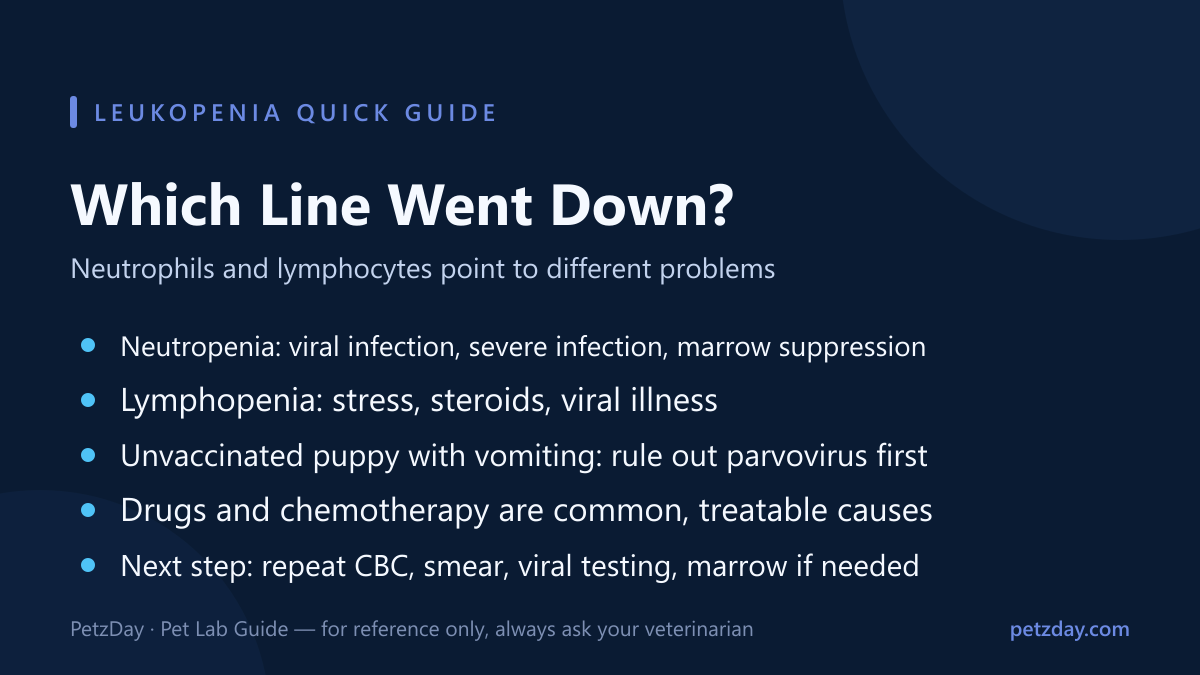
Leukopenia in dogs: quick reference
- Low neutrophils, normal lymphocytes — decreased marrow production, increased use in inflammation, drug injury, or immune-mediated destruction
- Low lymphocytes, normal or high neutrophils — stress or corticosteroid effect is the most common explanation
- Low neutrophils with a left shift or toxic change — severe inflammation or sepsis
- Several cell lines low, including red cells and platelets (pancytopenia) — marrow disease, drug or toxin injury, or severe illness; bone marrow sampling is often part of the workup
- Low counts in a young, unvaccinated puppy — parvovirus testing moves to the front of the list
Common causes of leukopenia in dogs
Vets sort leukopenia by mechanism: decreased production, increased consumption, increased destruction, or a shift of cells out of circulation (eClinPath).
- Viral infections. Parvovirus and canine distemper (acute phase) are the classic viral causes of transient neutropenia in dogs (Merck Veterinary Manual). Parvovirus infects the bone marrow and intestinal lining, and a low WBC supports the diagnosis — though not every infected dog has one (VCA Animal Hospitals).
- Severe bacterial infection or sepsis. Neutrophils can be consumed faster than the marrow can replace them, especially when inflammation is overwhelming. The typical pattern is neutropenia with a left shift and toxic change (eClinPath; Merck Veterinary Manual).
- Bone marrow suppression. Chemotherapy, radiation, some anti-epileptic and anti-thyroid drugs, estrogen, and other toxins can injure marrow precursors. Marrow cancer or infiltration by tumor cells can do the same, and other cell lines often fall too (Merck Veterinary Manual; eClinPath).
- Immune-mediated neutropenia. This is an uncommon cause in which the immune system destroys neutrophils. Vets may suspect it when other causes are excluded and the count responds to corticosteroid treatment (eClinPath).
- Less common causes. Some breeds, including Tervuren Shepherds and Australian Shepherds, can have lower normal neutrophil counts. Gray Collies can have cyclic neutropenia, and certain breeds can develop neutropenia from inherited vitamin B12 problems (eClinPath).
Stress alone is not a typical cause of a low total WBC. It usually lowers lymphocytes while raising neutrophils, so the total stays normal or goes up (Merck Veterinary Manual).
Symptoms & when to worry
A low WBC does not cause symptoms directly. What you see comes from the underlying disease, plus the infection risk that comes with very low neutrophils: fever, lethargy, poor appetite, vomiting, diarrhea, weight loss, dehydration, or recurrent infections (Merck Veterinary Manual; eClinPath). Mouth ulcers or a sore mouth are also worth reporting to your vet.
When to worry. Treat an unvaccinated puppy with vomiting or diarrhea as an emergency and ask about parvovirus testing right away (VCA Animal Hospitals). Also call promptly for a high fever with weakness, bloody diarrhea, repeated vomiting, refusal to drink, collapse, or an infection that keeps coming back. A fever in a dog with a very low neutrophil count needs same-day veterinary advice.
How vets work it up
The workup answers two questions: how low is the count, and why did it fall?
- Repeat the CBC and differential. Vets confirm the number and look at the trend; a single low result can be transient (eClinPath).
- Read the blood smear. The smear checks the automated count and looks for toxic changes, left shift, abnormal cells, or blasts that point toward inflammation, drug injury, or marrow disease (Merck Veterinary Manual).
- Test for the likely infection. Parvovirus testing is prioritized in young or unvaccinated dogs with vomiting and diarrhea; distemper testing depends on history and signs (VCA Animal Hospitals; Merck Veterinary Manual).
- Look for the source. History, physical exam, imaging, urine testing, and cultures help find hidden inflammation, infection, or cancer.
- Consider bone marrow sampling. If the count stays low without an explanation, if several cell lines are low, or if leukemia or marrow disease is suspected, vets may aspirate the bone marrow (eClinPath; Merck Veterinary Manual).
Treatment is directed at the cause. Your vet will decide whether supportive care, antibiotics, or other treatment is needed while results are pending.
What to track between visits
A single number is a snapshot; the trend is what your vet reads. Keep a simple log of:
- Temperature, if your vet asks you to check it
- Appetite, water intake, vomiting, and diarrhea
- Energy level, weight, and gum color
- Any mouth sores or signs of infection
- Medications, doses, and chemotherapy dates
- Every CBC result and the date it was run
If more than one cell line is low, your vet may also check platelets and clotting; our guide to platelets and clotting tests explains that workup. Create a free PetzDay account to keep each report and note in one place, and bring the trend to your next visit. For the rest of the CBC, see our complete blood count guide and our white blood cell differential guide.
FAQ
Is a low white blood cell count in dogs serious?
It depends on which cell line is low and why. Mild lymphopenia from stress is common and often not serious, while severe neutropenia can leave a dog vulnerable to infection and needs prompt veterinary care (eClinPath; Merck Veterinary Manual).
Can stress cause a low white blood cell count in dogs?
Stress usually causes lymphopenia, but it also tends to raise neutrophils, so the total WBC is typically normal or high. A low total WBC is not the classic stress pattern and deserves a closer look (Merck Veterinary Manual).
Can a dog recover from a low white blood cell count?
Many dogs do, depending on the cause. Viral infections and drug-related marrow suppression can improve as the infection clears or the drug is stopped, while marrow disease and some immune-mediated conditions require longer treatment (eClinPath; Merck Veterinary Manual). Ask your vet what the expected course is for your dog.
What should I feed a dog with a low white blood cell count?
There is no specific diet that raises white blood cells. Ask your vet whether food-safety changes are needed, especially during chemotherapy or when neutrophils are very low (eClinPath). Cooked food and careful handling are common topics, but the advice should come from your veterinary team.
Is leukopenia in dogs contagious?
The low count itself is not contagious, but the cause can be. Parvovirus spreads through infected feces and survives in the environment, so an unvaccinated puppy with vomiting or diarrhea should be kept away from other dogs until your vet advises otherwise (VCA Animal Hospitals).
References
- eClinPath (Cornell University) — Leukogram changes: individual white blood cells
- eClinPath (Cornell University) — Leukogram patterns
- eClinPath (Cornell University) — Pancytopenia
- Merck Veterinary Manual — Leukogram Abnormalities in Animals
- VCA Animal Hospitals — Parvovirus in Dogs
All web sources accessed October 2026.
Last reviewed: November 17, 2026. This article is for general education and does not replace an examination by your veterinarian. Follow your vet's guidance for all testing and treatment decisions.