Complete Blood Count for Pets: Reading HCT, HGB, RBC, WBC, and Platelets
A plain-English guide to the CBC — the most common blood test in veterinary medicine — and what each number can, and cannot, tell you about your dog or cat.
The complete blood count — almost always shortened to CBC — is the single most common blood test your veterinarian will run. It is inexpensive, fast, and surprisingly informative, which is why it shows up in wellness visits, pre-anesthetic screens, mystery-illness workups, and emergency rooms alike. Despite that, the report can look like alphabet soup: HCT, HGB, RBC, MCV, WBC, and a long column of percentages from something called a differential.
This guide walks through what each part of the CBC actually measures, what high and low results tend to mean, and — just as importantly — what a single abnormal number does not prove. Think of it as preparation for a better conversation with your veterinary team, not a replacement for one. You can also browse the excellent Cornell eClinPath hematology library for deeper technical detail.
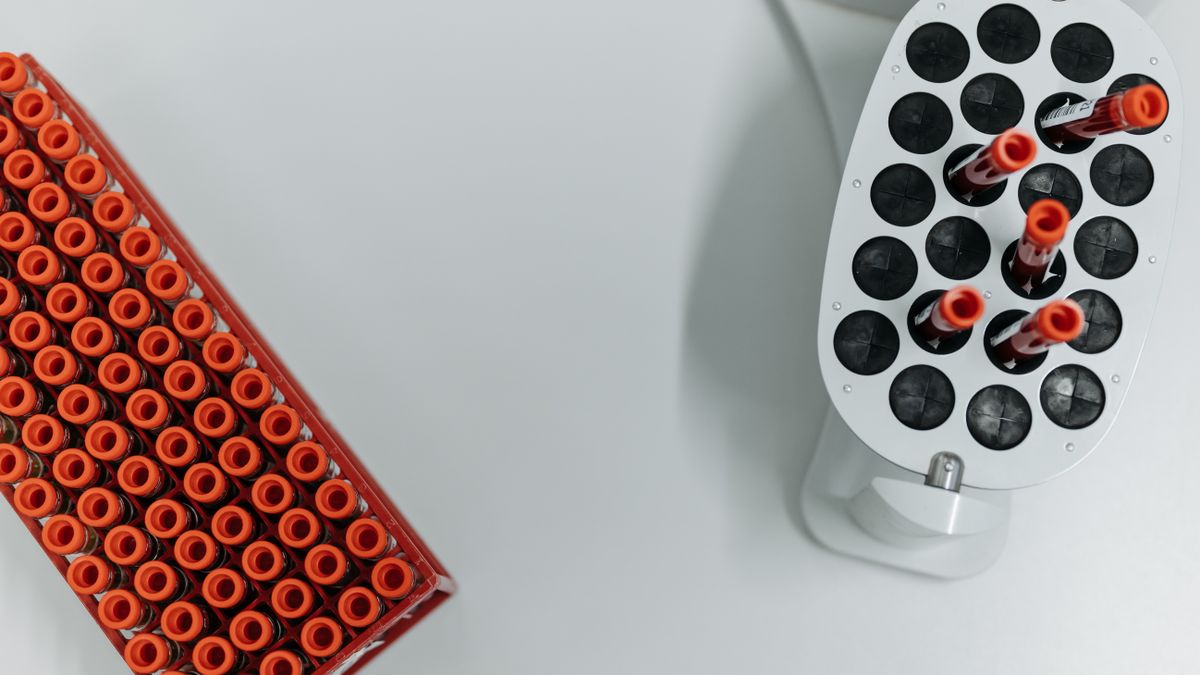
Reference ranges vary slightly by laboratory, breed, and age — always read the range printed on your own report.
The red cell side: HCT, HGB, RBC, and MCV
Red blood cells carry oxygen. The hematocrit (HCT) is the percentage of blood volume made up of red cells; hemoglobin (HGB) measures the oxygen-carrying protein itself; and the red blood cell count (RBC) simply counts the cells. Because these three travel together, they are read as a family. A typical adult dog runs an HCT of roughly 37–55%, while cats are usually a touch higher.
When the red cell values are low, the pattern is called anemia. The next question is why: blood loss, destruction of red cells, or a bone marrow that is not producing enough new cells. The mean corpuscular volume (MCV) helps here — small cells hint at iron deficiency, large cells suggest regeneration or certain breed quirks, and normal-sized cells leave both doors open. A reticulocyte count is the tiebreaker, because it shows whether the bone marrow is responding appropriately.
When red cell values are high, dehydration is the most common explanation — the cells are not more numerous, the plasma around them is simply scarcer. True overproduction is rare but real, and can be seen with chronic low oxygen levels or, occasionally, a bone marrow disorder. In greyhounds and other sighthounds, mildly high HCT can be completely normal.
The white cell side: WBC and the differential
White blood cells defend the body. The total white blood cell count (WBC) is a blunt instrument — it tells you something is happening, but not what. The differential splits that total into neutrophils, lymphocytes, monocytes, eosinophils, and basophils, and it is the proportions that carry the diagnostic weight. A high neutrophil count with a "left shift" (immature neutrophils) is classic for bacterial infection or significant inflammation.
A high lymphocyte count can be caused by something as ordinary as excitement at the clinic, but also by chronic inflammation or, rarely, leukemia. Eosinophils often point toward parasites or allergies. A "stress leukogram" — high neutrophils, low lymphocytes, high blood sugar — is so common in sick or frightened patients that it has its own nickname. Your veterinarian reads these patterns together with the physical exam, not in isolation.
Platelets: the tiny first responders
Platelets are cell fragments that plug small leaks in blood vessels. Counting them is part of every CBC, and the results are notoriously prone to clumping artifacts — platelets like to stick together in the sample tube, which can make the automated count look falsely low. A quick look at the blood smear resolves most of these questions. Genuinely low platelets raise the risk of bruising and bleeding and deserve prompt investigation.
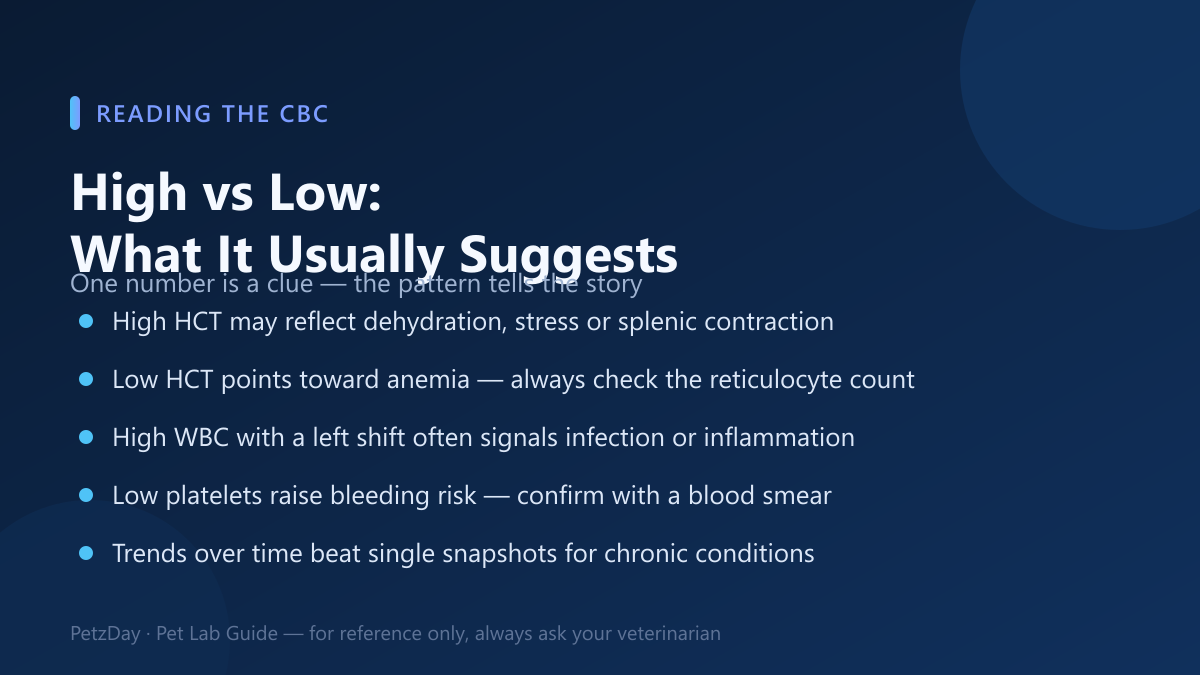
A single value is a clue; the pattern of several values is the story.
High or low? Reading the pattern, not one number
Experienced clinicians rarely react to a single flagged value. Instead they ask: which values moved together, how far outside the range are they, and does the history fit? A mildly low HCT in a dog recovering from surgery means something very different from the same value in a dog that suddenly collapsed. Serial measurements over days or weeks often matter more than any single snapshot.
It also helps to know your own pet's baseline. Some individuals — and some breeds — live happily outside the printed reference range. If your dog has always had a slightly high HCT, a new result at the same level is rarely alarming. This is one reason annual lab work is so valuable even when your pet looks perfectly healthy.
What the CBC cannot tell you
The CBC describes the blood cells, not the organs that produce them or the diseases that disturb them. It cannot diagnose cancer, identify an infection, or stage kidney disease on its own. It is a map of where to look next. That is why it is almost always paired with a chemistry panel, and often with urinalysis, imaging, or more specific tests.
A blood test is a question, not an answer. The value is in knowing which question to ask next.
Questions to ask your veterinarian
- Which specific values are outside the reference range, and by how much?
- Does the pattern suggest infection, inflammation, anemia, or something else?
- Do we need a reticulocyte count or a blood smear review?
- Should we recheck in a few weeks to see a trend?
- Are these results explained by breed, age, or stress — or do they need action?
- How do these numbers fit with what you saw on the physical exam?
The CBC across life stages
Normal blood counts are not the same at every age. Puppies and kittens run lower hematocrits than adults and show wider swings in white cells during growth. Very young animals can also deploy a different safety margin — values that would raise eyebrows in an adult may be routine in a neonate. Conversely, senior pets often show mildly lower red cell values simply because the marrow becomes less brisk over time.
This is why the best reference for your pet is the pet itself. A CBC taken while healthy gives your veterinarian a baseline to compare against later. Without that baseline, an older dog's mildly low HCT is ambiguous; with one, the question answers itself. If your clinic offers routine screening, storing one healthy-era panel is one of the cheapest forms of insurance in veterinary medicine.
Keep Every Result in One Place
Results only become a story when you can compare them. PetzDay keeps every lab panel in one timeline you own — so trends stand out, and any clinic can see the full history in a single link.
- New to blood work? Start with the complete guide to dog blood test results.
- Browse more lab value guides, or create a free PetzDay account to keep your own results in one place.
References and further reading
- Cornell eClinPath — Hematology
- Merck Veterinary Manual — Clinical Pathology
- VCA Animal Hospitals — Pet Health Library
- AVMA — Pet Owner Resources