How to Find Pet-Friendly Hotels & Avoid Hidden Pet Fees
Hotel pet fees are not one thing: they can be nightly, per stay, per pet, or a refundable deposit. Here is how to read a listing, what to ask before booking, where to search, and when a service animal is legally exempt.
The most expensive part of a dog-friendly hotel is often not the room. It is the fee that appears at checkout: $75 per night, $150 per stay, $250 refundable deposit, or a "cleaning fee" that is charged whether the room is clean or not.
None of those structures is dishonest. They are just different, and the difference can exceed the cost of the room over a long weekend. This guide explains what the fees pay for, how to compare them honestly, and how to avoid paying for a policy you did not need.
This post contains affiliate links. If you buy through them, PetzDay may earn a commission at no extra cost to you.

A pet-friendly room. Hotels often set aside specific rooms or floors for guests with pets. Photo: HotelNationalMarcom / Wikimedia Commons (CC BY-SA 4.0).
The five ways hotels charge for pets
When a listing says "pet friendly," it usually means one of these:
- No fee. The hotel accepts pets and absorbs the cost. These properties exist, and they are worth planning a route around.
- A nightly fee. Commonly quoted per pet, per night. Good for one night, expensive for a week.
- A per-stay cleaning fee. Charged once regardless of length, often non-refundable. This is the structure that favors longer stays.
- A refundable deposit. Returned if the room is undamaged, sometimes minus a cleaning charge. Read the inspection terms.
- A hybrid. A nightly fee plus a deposit, or a per-stay fee plus a weight limit.
There are also limits that function like fees: a 20-pound weight cap, a two-pet maximum, or a breed restriction. A hotel that "accepts pets" but caps them at 20 pounds is not accepting your Labrador.
What the listing usually does not tell you
Before you book, get five answers in writing — email or chat is better than a phone call you cannot forward:
- Is the fee per night or per stay?
- Is it per pet?
- Is any part refundable?
- Is there a weight or breed limit?
- Which rooms are pet rooms, and do they have direct outdoor access?
Two more questions save real time on arrival: where is the nearest relief area, and is it lit after dark? A hotel that backs onto a highway has a different practical value than one beside a park, even at the same price.
Where to search
BringFido
BringFido lists more than 150,000 hotels, vacation rentals, bed and breakfasts and campgrounds in over 100 countries, with hand-verified pet policies and no booking fee. The useful part is not the list; it is the policy summary attached to each property — fee, weight limit, number of pets, and whether pets can be left unattended.
It is also a good reality check on brands. A chain's pet policy is usually set at the property level, so two hotels under the same name in the same state can charge differently.
Airbnb and vacation rentals
Airbnb's search filters include "Pets allowed," but the house rules matter more than the filter. Read the listing's pet rules, then message the host before booking and confirm three things: the pet fee (if any), whether the dog can be left alone, and whether the yard is fenced. A "fenced yard" in a listing photo can mean a decorative hedge.
Vacation rentals often charge a one-time pet fee rather than a nightly one, which makes them cheaper for stays of four nights or more. They also put the dog in a house rather than a corridor, which many dogs handle better.
Booking direct vs. a third-party site
Third-party bookings sometimes fail to pass the pet request to the property. If you book through an OTA, call the hotel afterward, confirm the pet is on the reservation, and ask them to note it. If the fee is different from what the listing said, you want that resolved before arrival, not at the desk.
Why hotels charge $100 or more
A pet fee is not pure profit. It usually covers some combination of:
- Deep cleaning. Hair, dander and odor require more than a standard turnover, and the room may be out of inventory longer.
- Room allocation. Many hotels concentrate pets on specific floors or room types, which reduces their ability to sell those rooms to other guests.
- Wear and damage. Scratched doors, chewed furniture and stained carpets are common enough to be priced in.
- Insurance and liability. Some properties carry additional coverage or restrictions tied to animals on site.
- Demand. Pet-friendly inventory is scarce in many cities, and hotels price accordingly.
That does not mean every fee is fair. It does mean the $150 fee is not going to be negotiated away at check-in. The time to ask is before you book.
How to pay less without gaming the system
- Do the math on the structure. For a one-night stay, a $25 nightly fee beats a $150 per-stay fee. For five nights, it is the reverse.
- Prioritize no-fee properties when the route allows it. A no-fee hotel 15 minutes further from your destination can be cheaper than a fee-charging hotel downtown.
- Ask about a waiver for a second stay. Some independent hotels will waive or reduce the fee for repeat guests. It is worth one polite email.
- Travel midweek and off-season. Pet rooms are often the last to sell, and rates for them soften when occupancy drops.
- Consider a vacation rental for longer stays. One cleaning fee plus a house is often cheaper than five nights of pet fees.
- Do not lie about the dog. "Emotional support" claims for a pet are not a legal exemption, and hotels increasingly ask for documentation. Bringing an undeclared dog can get you charged a much larger penalty or asked to leave.
Service animals are not pets
Under the ADA, hotels must allow trained service dogs in all areas where guests are allowed, and they cannot charge a pet fee or deposit for them. A service dog is a dog individually trained to perform a task for a person with a disability. Emotional support animals, therapy animals and companion animals do not qualify under the ADA, and hotels may apply their pet policy to them.
If a front desk tries to charge a pet fee for a service dog, the Department of Justice's service animal guidance is the document to cite. It also explains the two questions staff may ask: whether the dog is required because of a disability, and what work or task the dog has been trained to perform.
At check-in and during the stay
- Bring a crate or a blanket. A dog on the bed is the most common cause of a damage charge, and a blanket from home protects the bedspread and comforts the dog.

Waterproof Blanket, Couch Covers for Dogs, Reversible Protector
Compare blankets on AmazonAs an Amazon Associate we earn from qualifying purchases.
- Tell the front desk you have a dog. Even if the reservation says so. It prevents a housekeeping surprise and usually gets you the room closest to an exit.
- Use the relief area, and carry bags. A hotel that has to clean the landscaping will remember it on the next pet policy review.
- Do not leave a barking dog alone. If the hotel allows pets to be left unattended, crate the dog and leave a phone number the staff can call. If it does not, book daycare for the day.

36 in Handle Basic Dog Crate for Indoor Use, Pet Kennel Cage, Dark Grey
Compare crates on AmazonAs an Amazon Associate we earn from qualifying purchases.
- Report damage before checkout. It is almost always cheaper than being charged after an inspection.

SLSON Dog Bowls Pet Collapsible Bowl with Cover Lids, 2 Pack Travel Bowls
Compare bowls on AmazonAs an Amazon Associate we earn from qualifying purchases.
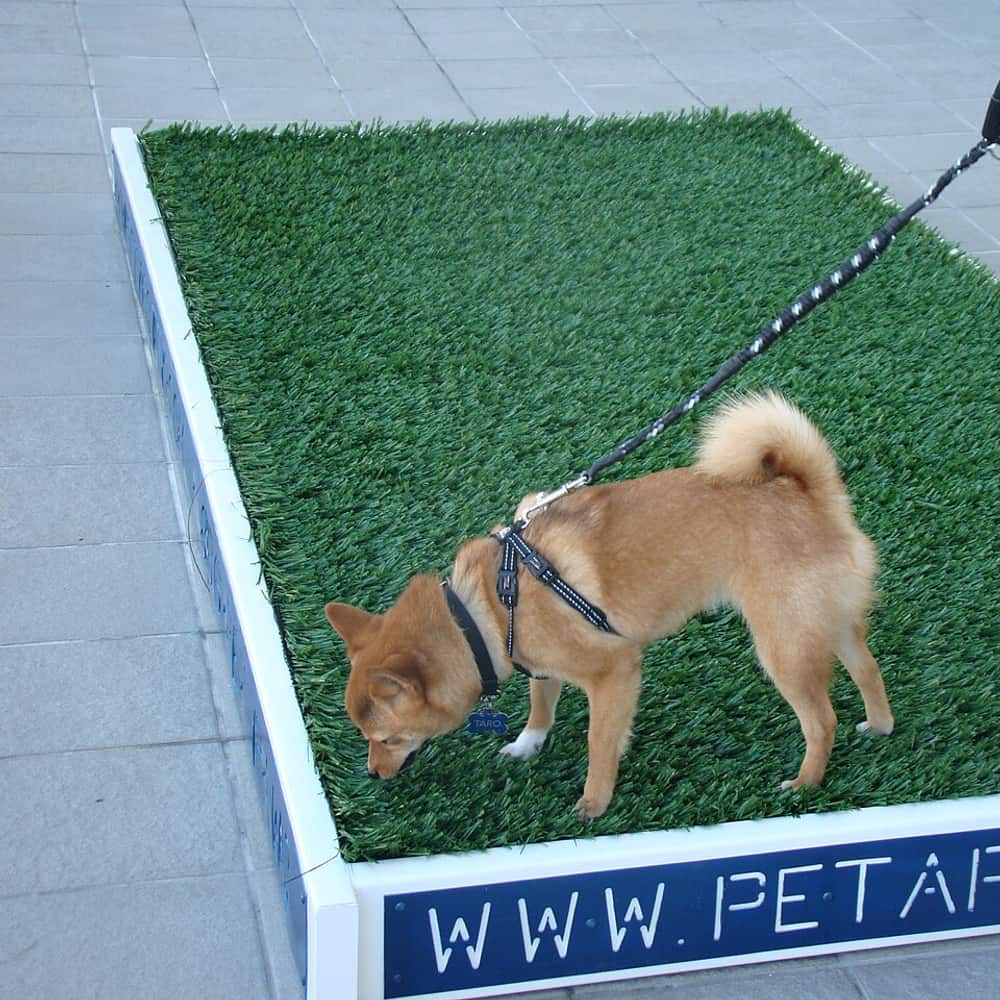
Ask where the relief area is before you unpack — and whether it is lit at night. Photo: Taro the Shiba Inu / Wikimedia Commons (CC BY 2.0).
Red flags in a listing
- "Pet friendly" with no fee, weight limit or pet count anywhere on the page.
- A fee described as "starting at" — that usually means it depends on the size of the dog.
- A weight limit under 25 pounds at a property that markets itself to hikers or road-trippers.
- A policy that says "no pets" but a review mentions dogs. Policies change; confirm in writing.
- A deposit that is described as refundable but with an inspection clause you cannot see.
Keeping the policy straight across a trip
Different hotels, different fees, different rules — and the receipts end up in three different email threads. Keep the confirmations, the pet policy, and your dog's vaccine records in one place before you leave. PetzDay is free for that: start a pet profile and add the rabies certificate and vaccine dates, so the next front desk question takes ten seconds instead of ten minutes.
For the bigger picture, start with the complete guide to traveling with dogs. If you are driving between hotels, the road trip checklist covers the car side; if you are flying in, the airline pet fee comparison covers the carrier and cabin rules.
FAQ
Is a hotel pet fee refundable?
Sometimes. A deposit is usually refundable if the room passes inspection; a cleaning fee usually is not. Ask explicitly which one you are paying, and get it in the confirmation email.
Can a hotel refuse my dog because of breed or size?
Yes, if it is a pet. Private businesses can set pet policies, including weight and breed restrictions. The exception is a trained service dog, which must be admitted regardless of breed or size.
Is it cheaper to book a pet-friendly hotel or a vacation rental?
For one or two nights, a hotel is usually cheaper. For four or more nights, a vacation rental with a one-time pet fee often wins, especially if you need space for more than one dog.
Do I have to disclose my dog at check-in?
Yes. An undeclared pet can trigger a much larger cleaning or damage charge, and some hotels will ask you to leave. Disclosure also gets you the room nearest an exit, which most dog owners prefer.
Can I leave my dog alone in the room?
Only if the hotel allows it. Many pet-friendly hotels permit it if the dog is crated and quiet; others prohibit it entirely. Ask before you book, and never leave a dog who barks when alone.
How do I prove my dog is a service animal?
There is no federal registry or certificate. Staff may ask whether the dog is required because of a disability and what task it performs. They may not ask for medical documentation or demand a demonstration.
References
- BringFido — Pet-friendly hotel search with verified policies
- BringFido — Example policy: Kimpton Brice Hotel, no pet fee, three pets
- U.S. Department of Justice — Service animals under the ADA
- APHIS — Travel with a pet
- CDC — Bringing a dog into the U.S.
All web sources accessed November 2026. Hotel pet policies are set per property and change often; confirm with the hotel before booking.
Last reviewed: November 10, 2026. This article is for general information and does not replace legal or veterinary advice.