Pet Sitter Instructions: Free Template + What Sitters Actually Need
A free pet sitter instructions template plus the details sitters actually need — feeding, medication, vet contacts, and routine — so you can leave home without the guesswork.
A pet sitter instructions template is a one-page handoff that tells your sitter how to feed, medicate, and reach your vet while you are away. The most useful sheets go beyond contact numbers: they spell out the daily routine, list every medication exactly as prescribed, and say what to do in an emergency. This guide gives you the fields that matter, the medication section sitters ask about most, and a five-line quick reference you can copy in under a minute.

One page is enough: food, medication, contacts, and routine.
Pet sitter instructions template: the seven fields that matter
Start with these seven fields and the sheet answers almost every sitter question before it is asked — no medical judgment required, just the information your vet already gave you.
- Identification. Your pet's name, breed, age, color, and microchip number, plus any cue the pet responds to.
- Food and water. Brand, amount, feeding times, treats, and any food the pet must not have.
- Medication. Each drug, dose, time, and how it is given, copied from the prescription label — details in the next section.
- Daily routine. Walk times, potty schedule, commands, and where the pet sleeps or hides.
- House rules. Doors and gates, leash or harness habits, trash, off-limit rooms, and whether visitors are okay.
- Emergency contacts. Your veterinarian, the nearest 24-hour emergency clinic, and a backup person who can take over if you cannot be reached (AVMA).
- Return logistics. When you will be back and reachable, and who to call if your plans change.
This sheet is an information record, not medical advice: write down what your vet prescribed and what you already do, and flag anything the sitter should confirm with your vet.
Medication instructions your sitter needs
For dog sitter medication instructions, the rule is to copy the prescription exactly — drug name, dose, how often, and how it is given — rather than summarizing it from memory.
- List every medication and supplement, including over-the-counter products, not just the "important" prescriptions.
- Write the dose as the label shows it. "Half a pill" is easy to misread; use the amount and tablet strength the vet wrote.
- Note "with food" or "on an empty stomach" only if your vet said so. Do not add timing advice the prescription does not include (Merck).
- Store medications where the sitter can find them, clearly labeled and out of the pet's reach.
- Say what to do for a missed dose. Usually the right answer is "call the vet," not double the next dose — but let your vet set that rule.
Do not add treatment advice to the sheet. The template records the veterinarian's instructions; dose changes and skipped-dose decisions stay with your vet.
What pet sitters actually need to know
Sitters usually need the routine more than the full medical history — the essentials are food amounts, the hiding spot, door rules, and one working phone number.
- Normal behavior, so the sitter notices when something is off.
- One feeding routine and exactly where the food and bowls live.
- Escape routes. Which doors, fences, or harness habits matter for your pet.
- The nearest 24-hour emergency clinic — emergencies rarely happen during regular business hours (AVMA).
- Microchip number and vet phone, in case the pet gets out and someone else finds them first.
Put a printed copy on the fridge and a digital copy on the sitter's phone, so the same information is available at home and at the clinic.
Pet sitter instructions quick reference
Copy these five lines onto any sheet and you have covered the situations that cause most sitter calls.
- Food: brand, amount, times, and any "no table scraps" rule.
- Medication: each drug, dose, and time — exactly as prescribed.
- Vet + emergency clinic: name, phone, address, and after-hours line.
- Routine: walk and feeding times, commands, and where the pet hides.
- Backup person: a neighbor or relative who can take over.
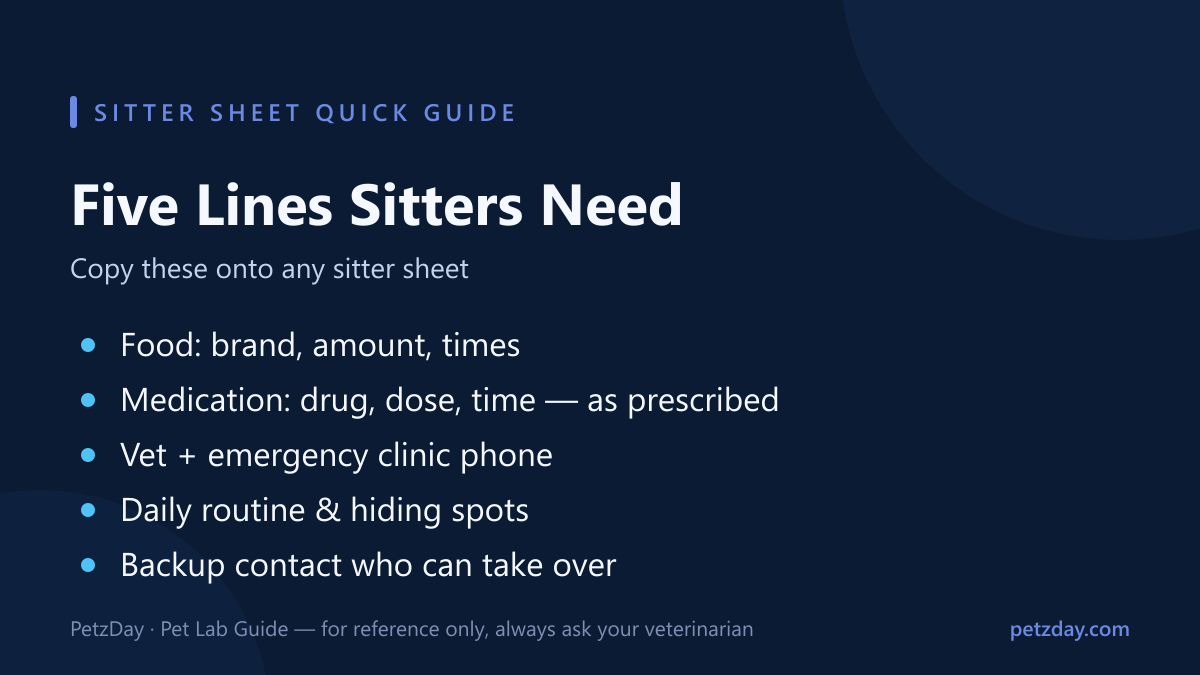
Five lines cover most feeding, medication, and emergency questions.
Keep this five-line list and the seven-field template together — one for the fridge, one for the sitter's phone.
How to keep the instructions current
An out-of-date sitter sheet is worse than none, so update it the same day a dose, phone number, or routine changes.
- Review before every trip. Confirm doses and phone numbers still match what the vet most recently said.
- Keep the sheet next to your pet's records, so the vaccine history and the handoff stay in one place.
- Store a digital copy on your phone. The paper on the fridge does not help a sitter who is standing in an emergency lobby.
PetzDay keeps your pet's medications, notes, and contacts in one shareable timeline on your phone — useful for the handoff, but it is your record, not a replacement for your vet's written instructions. To build the master file behind the sitter sheet, start with how to organize pet records when you see multiple vets, and make sure you can get copies of your pet's vet records when a new sitter or clinic asks for them. Create a free PetzDay account or browse all articles.
FAQ
What should I leave for a pet sitter?
Leave food amounts and times, every medication with its exact dose and schedule, your vet's phone number, the nearest 24-hour emergency clinic, and a backup contact who can take over. Add the routine — walks, hiding spots, and door rules — plus your return time. One page is enough; the sitter does not need the full medical file unless there is a known condition.
What goes in dog sitter medication instructions?
Write the drug name, the dose exactly as the prescription label shows it, how often to give it, and how to give it — with food, in a pill pocket, or as your vet directed. List supplements and over-the-counter products too. Do not summarize from memory, and do not add dosing advice: if a dose is missed or looks wrong, the sitter should call your vet.
How much detail is too much for a pet sitter?
Anything beyond one page is usually too much. Sitters need the routine, the medications, and the emergency numbers — not a full medical history. Put the details that change often, such as doses and phone numbers, on the front, and keep background notes in a separate file the sitter can read if something comes up.
Can I just text my sitter the instructions?
Texting works as a backup, but it scatters the information across messages and is hard to find at 2 a.m. Write one sheet — paper or digital — so the sitter has a single source. Text a photo of it as the backup, and update the sheet whenever a dose or number changes.
Should the sitter sheet include the emergency vet?
Yes. Your regular vet may be closed when something happens, so include the nearest 24-hour emergency clinic with its phone number and address, plus your regular vet's contact. Also list a backup person who can make decisions if you cannot be reached (AVMA).
References
- AVMA — Pet owners resources
- AVMA — Emergency care for pet owners
- VCA Hospitals — Know Your Pet
- Merck Veterinary Manual — Dog Owners
Last reviewed: October 27, 2026. This article is for general education and does not replace an examination by your veterinarian.