Pancreatitis in Dogs: Symptoms, Causes & What to Ask Your Vet
Pancreatitis in dogs symptoms — repeated vomiting, a hunched posture, appetite loss — explained in plain English, plus the common causes of pancreatitis in dogs, how vets confirm it, and the questions to ask your vet.
Pancreatitis in dogs symptoms typically start with repeated vomiting, a hunched or "praying" posture, a tender belly, skipped meals, and unusual tiredness — and mild cases can look like simple appetite loss. Pancreatitis is inflammation of the pancreas, the organ that makes digestive enzymes and insulin, and it is painful, ranging from mild to severe (Merck Veterinary Manual, updated 2024; VCA Animal Hospitals, 2026).

Acute or chronic, mild or severe — the pattern and timeline matter more than any single number.
Pancreatitis symptoms in dogs: what owners notice first
The classic sign of pancreatitis in dogs is repeated vomiting paired with a posture that signals abdominal pain — but mild episodes can look like "not eating" and low energy (Merck, 2024).
The pancreas sits behind the stomach, so inflammation shows up as vomiting rather than an outside clue. eClinPath notes that pancreatic inflammation is usually suspected after vomiting, diarrhea, or elevated enzyme activity appear — always read alongside the history and exam (eClinPath, Cornell University).
Quick-check list: what you can observe at home, and what it often points to.
- Repeated vomiting, sometimes right after eating — the most common sign owners report when it persists.
- Hunched back or "prayer position" (rear up, front down) — a classic posture of abdominal discomfort (VCA, 2026).
- Guarding the belly — flinching when lifted, or a tense abdomen; don't press on it yourself.
- Appetite loss — skipping meals or favorite foods; in mild cases this, lethargy, and diarrhea may be the only signs (Merck, 2024).
- Low energy or weakness — sleeping more, no interest in walks.
- Diarrhea — often alongside the vomiting.
- "Just not right" — a softer stool, a picky eater, a dog slower than usual.
When to worry. If your dog is repeatedly vomiting or seems in pain, call your vet right away — same-day matters, because pancreatitis can escalate quickly. Head to an emergency hospital if your dog cannot keep water down, the abdomen looks swollen or feels hard, the gums look pale, or your dog is weak or difficult to rouse. Severe pancreatitis can be life-threatening, not a wait-and-see situation (VCA, 2026).
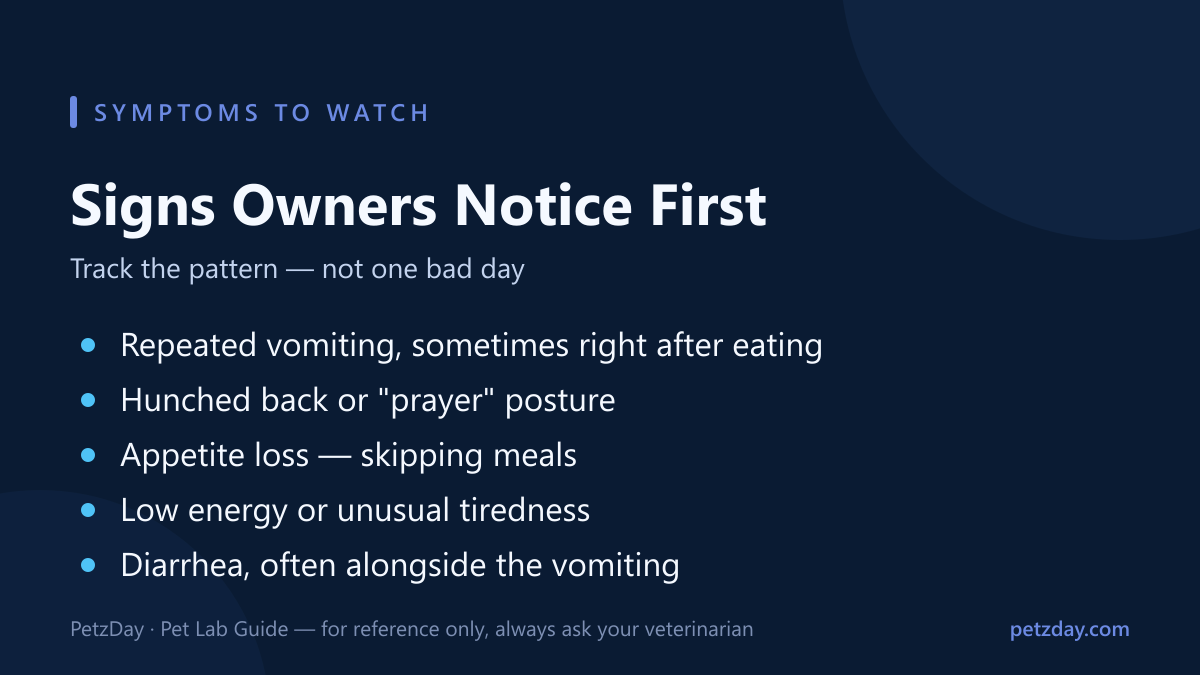
Bring this list to your vet — symptoms plus timing are what turn a guess into a diagnosis.
What causes pancreatitis in dogs
For most cases, no single cause is ever identified — but the known causes of pancreatitis in dogs group into a few triggers and risk factors (Merck, 2024).
- Fatty or inappropriate food — table scraps, trash, or other rich food is a common risk factor; a fatty meal is a classic trigger (Merck, 2024; VCA, 2026).
- High triglycerides — dogs with elevated blood fats are at higher risk (Merck, 2024).
- Hormonal conditions — Cushing's disease (hyperadrenocorticism) is a recognized risk factor (Merck, 2024).
- Some drugs — corticosteroids have been linked as a trigger in some cases (VCA, 2026; Merck, 2024). Never start, stop, or change a medication without asking your vet.
- Trauma or surgery — severe trauma or abdominal surgery can lead to pancreatitis (Merck, 2024).
- Breed, and rarely infections — higher prevalence in Miniature Schnauzers, Yorkshire Terriers, Cocker Spaniels, Dachshunds, Poodles, and sled dogs; infections such as Babesia canis or Leishmania may also contribute (Merck, 2024).
A note on canine pancreatitis causes: many dogs develop it with no obvious trigger at all, which is why the workup focuses on history and current health.
Acute vs. chronic pancreatitis in dogs
Vets sort pancreatitis into two patterns: acute episodes that come on suddenly, and chronic (also called relapsing) inflammation that keeps returning or smolders quietly (VCA, 2026).
- Acute pancreatitis — a sudden episode; it can be mild or severe, and both forms can be serious (Merck, 2024).
- Chronic pancreatitis in dogs — recurrent bouts, or ongoing inflammation with subtler signs: an appetite that comes and goes, soft stool, occasional vomiting (VCA, 2026; Merck, 2024).
- Why the label matters — a one-off episode means watching for a repeat; a chronic pattern often means long-term monitoring and rechecks, planned with your vet.
How vets confirm it
A lab value alone does not make the call — vets confirm pancreatitis by combining the exam, blood work, imaging, and your dog's history (eClinPath, Cornell University; WSU Veterinary Teaching Hospital, 2022).
- Physical exam — abdominal pain, dehydration, and overall condition.
- Blood work — a pancreatic lipase assay (the modern cPL-type tests) has largely replaced older enzyme measurements; a broader panel checks other problems, hydration, and electrolytes. For how these tests work, see our Pancreatic and GI testing guide; our complete guide to dog blood test results decodes the rest of the panel.
- Imaging — X-rays and ultrasound look at the pancreas and nearby organs (Merck, 2024).
Diet & monitoring
Diet is often part of the long-term picture, but what that means for your dog — fat level, portion size, snacks, timing — is a decision your veterinarian makes, not a search result.
During and after an episode, a dog may need a guided return to eating, and conditions like high triglycerides can change the plan. Fat matters, but so do snacks, table scraps, and garbage raids.
What to track at home between visits:
- How often vomiting happens, and whether it follows meals
- Appetite — what your dog ate, and what they refused
- Water intake and energy level, day to day
- Stool changes — soft, greasy, or bloody
- Weight, especially any drop from the last reading
- Possible scavenging or new foods
Those notes, plus each set of lab results, give your vet a trend to read at the recheck.
What to ask your vet
A short list of questions is the most useful thing you can bring to a pancreatitis conversation — here are six that matter most.
Owners often leave thinking "my dog has pancreatitis — now what?" Write these down before the visit:
- How confident are we that this is pancreatitis — and what else could look similar? Vomiting has many causes; vets often rule other options out as they go.
- How severe does this episode look? Mild and severe episodes mean different levels of monitoring — ask where your dog falls.
- Is my dog in pain — and what's the plan for that? Pancreatitis is painful; your dog should not have to just endure it.
- What signs should send me back in, day or night? Get a specific list and save it.
- When is the recheck, and what will it include? An exam, blood work, or both — know the plan and the timeline.
- If my dog has pancreatitis again, what should we change? Agree on a monitoring plan now, while you have your vet's attention.
Keep Every Result in One Place
Pancreatitis episodes are easy to lose in scattered paperwork — a discharge sheet here, a lab PDF there, and a symptom story only you remember. A recheck, a new vet, or a 2 a.m. emergency goes better with the history on one screen.
PetzDay is built to hold that history: log each episode's symptoms, tag every lab result by date, and pull up the trend when your vet asks how long it's been going on. Create a free PetzDay account — it takes a few minutes — or browse our full library of plain-English lab guides.
FAQ
Is pancreatitis in dogs painful?
Yes. Abdominal pain is a hallmark sign, and vets take it seriously. Owners often see hunching over, a "prayer position," restlessness, or flinching when lifted or touched on the belly. If your dog seems painful, call your vet right away — they can assess how serious it is and provide proper relief.
How long does recovery take?
It depends on severity, how quickly care starts, and how your dog responds. Mild episodes may settle within a few days with vet-guided care; severe episodes often need two to four days of hospital-level care (VCA, 2026). There is no universal timeline — ask your vet for a realistic expectation and a recheck plan.
Can it come back?
Sometimes. Some dogs have a single episode and never another; others develop recurrent bouts, which vets may call chronic or relapsing pancreatitis (VCA, 2026). Risk factors like high triglycerides or a hormonal condition can keep the chance elevated (Merck, 2024). That is why follow-up visits and a monitoring plan matter.
References
- eClinPath (Cornell University) — Pancreas — accessed October 2026
- Merck Veterinary Manual — Pancreatitis and Other Disorders of the Pancreas in Dogs — updated December 2024
- VCA Animal Hospitals — Pancreatitis in Dogs — reviewed February 2026
- Washington State University Veterinary Teaching Hospital — Understanding your pet's lab tests (2022)
Last reviewed: October 9, 2026. This article is for general education and does not replace an examination by your veterinarian.