Pancreatic and GI Testing in Pets: Lipase, cPL, TLI, and Fecal Panels Explained
Vomiting and diarrhea are among the most common reasons pets visit the vet — and among the hardest to pin down. Here is how digestive tests narrow the possibilities.
Vomiting and diarrhea are among the most common reasons pets see the vet, and among the hardest to pin down; lipase and cPL, TLI, cobalamin, folate, and a fecal exam each narrow a different part of the digestive puzzle.
Digestive disease rarely announces itself with one clear signal. Vomiting can come from the stomach, the pancreas, the liver, or simply a bad snack. Diarrhea can be a parasite, a food sensitivity, an infection, or an unhappy pancreas. The tests in this family exist to move a vague story from "something's wrong" toward "this is what is wrong."
This guide covers the pancreatic enzymes (lipase, cPL), tests of digestive function (TLI, cobalamin, folate), and the humble fecal exam — the value-for-money champion of the lot. Trusted technical references include the Merck Veterinary Manual and eClinPath's chemistry section.
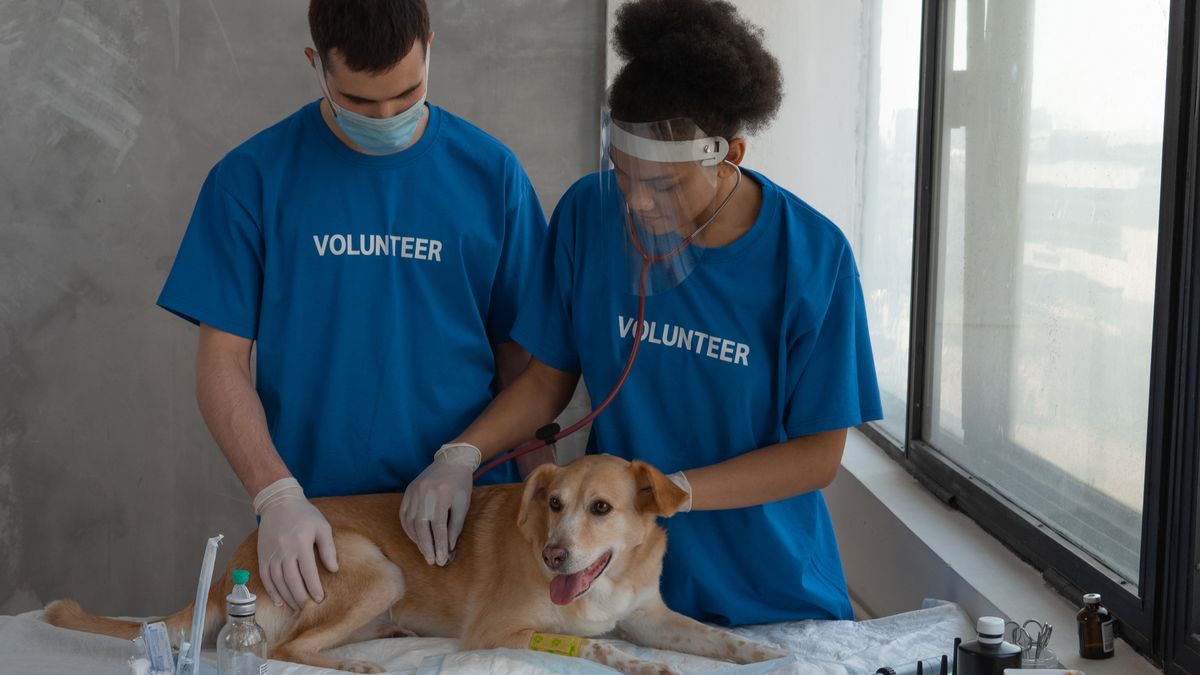
Test selection follows the clinical question: inflammation, function, or infection.
Lipase and the species-specific tests
Lipase is an enzyme made by the pancreas to digest fat. General lipase assays once had a reputation for noise — but modern tests measuring pancreas-specific lipase (Spec cPL in dogs, Spec fPL in cats) changed the game. These are far more accurate for pancreatitis, and they are paired with clinical signs and imaging rather than used alone.
Pancreatitis in dogs ranges from a mild upset to a life-threatening emergency, and its signs overlap heavily with everything else on the digestive menu: vomiting, appetite loss, a painfully tucked belly. In cats it is even more subtle — often no more than lethargy and a lost appetite in a cat who was fine last week. When suspicion is high, the specific lipase test earns its cost.
TLI and nutrient absorption
Trypsin-like immunoreactivity (TLI) measures a protein the pancreas is supposed to make. A low TLI points to exocrine pancreatic insufficiency (EPI) — the pancreas failing to produce digestive enzymes at all. The classic picture: a dog who eats well but stays thin, with pale, greasy, bulky stool. The fix, when the diagnosis is confirmed, is dramatic: enzyme supplementation turns many affected dogs around within days.
Cobalamin (B12) and folate round out the functional picture. B12 is absorbed at the end of the small intestine; chronic digestive disease there drops it, and low B12 is associated with worse outcomes and lingering lethargy. Folate tends to reflect bacterial populations in the small bowel. These values are cheap additions that change management, especially in chronic enteropathy cases.
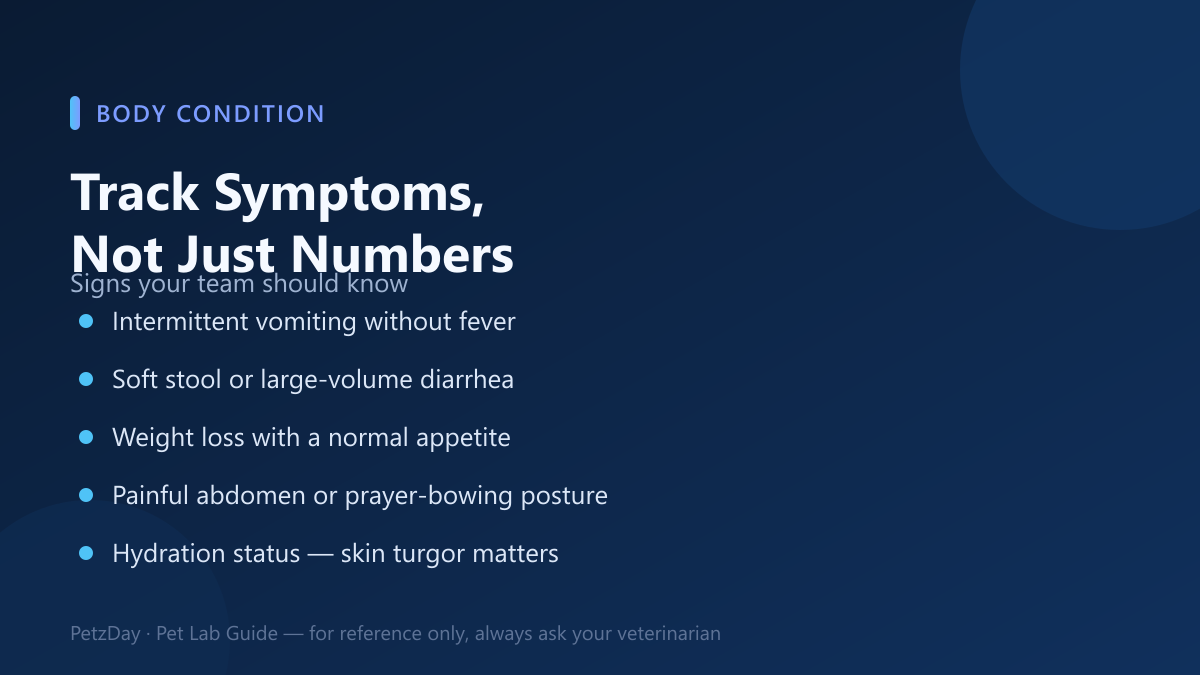
Track duration, frequency, and triggers — patterns in the history are as diagnostic as any number.
The fecal exam: small test, big catches
A fecal test is the only one that can reveal giardia, roundworms, hookworms, whipworms, coccidia, and more. Because several of these parasites are also a human health concern (think children on the living room floor), the fecal exam protects more than the pet. Fecal antigen tests boost sensitivity for giardia especially, which is notoriously missed on single floatation exams.
The common failure mode is the wrong sample: a dried-out specimen scraped up hours later tells the laboratory little. Fresh samples, a few hours old at most, ideally kept cool, give the best chance of an honest answer. When a dog or cat has recurring digestive signs and stools have never been tested, that is usually the first stone left unturned.
Putting it together
Digestive medicine is detective work, and the lab is one toolset among several — often alongside diet trials, ultrasound, and the response to treatment itself. The right order moves from broad and cheap (fecal, basic panel) to targeted and specific (cPL, TLI, B12). Pet owners make this faster by bringing timeline details: what changed first, what the stool looked like, what has already been tried.
Above all, do not let chronic, low-grade signs drift for years. Persistent vomiting or soft stool is not a personality trait; it is a symptom with a vocabulary that these tests know how to speak. The sooner the pattern is mapped, the shorter the road to the right diet and medicine.
Standardize the symptoms in writing — duration, frequency, triggers — and half the diagnosis writes itself.
Questions to ask your veterinarian
- Should we test pancreas-specific lipase, or start with screening panels?
- Would a diet trial answer more than more lab work right now?
- Is a fecal antigen test indicated, not just a floatation?
- Should B12 and folate be checked given chronic signs?
- What treatment response would confirm the suspected diagnosis?
Diet trials and the chronic GI toolbox
When digestive signs are chronic and infectious causes are ruled out, food becomes the next variable worth controlling. A structured elimination diet trial — typically a single novel protein or a hydrolyzed diet — is run strictly for six to eight weeks. The word strictly carries the whole experiment: one shared human dinner, one flavored medication, or one treat from the neighbor can reset the clock and erase the answer you were paying for.
The trial works because the body answers a clean question. If signs fade on the trial diet and return when the old diet resumes (a controlled "rechallenge"), the diagnosis of adverse food reaction earns confidence without invasive tests. If the trial changes nothing, the path shifts thoughtfully toward other chronic enteropathy options and, in some cases, endoscopy with biopsy.
Between trials, keep symptom notes the way your clinic does: date, stool quality chart, vomiting episodes, appetite, and anything new in the environment. Patterns that are invisible in conversation — every third day, worse after the dog park, aligned with a new treat brand — jump off a written log. Good histories shorten diagnostics, and chronically itchy, bloated, uncomfortable pets deserve shortcuts.
Above all, treat recurring digestive signs as a legitimate medical problem, not a management quirk. The tests described here are cheap individually and powerful together, and most pets — with the right combination of diet, parasite control, and targeted therapy — can return to the boring, wonderful normal that owners notice most when it comes back.
Keep Every Result in One Place
Results only become a story when you can compare them. PetzDay keeps every lab panel in one timeline you own — so trends stand out, and any clinic can see the full history in a single link.
- New to blood work? Start with the complete guide to dog blood test results.
- Browse more lab value guides, or create a free PetzDay account to keep your own results in one place.
References and further reading
- Merck Veterinary Manual — Gastrointestinal Disorders
- Cornell eClinPath — Pancreatic and GI Testing
- VCA Animal Hospitals — Pancreatitis in Pets
- Tufts Veterinary Nutrition — Diet and GI Health