Cat Health Record Template — Free Printable
A cat health record printable free to download: one page for vaccines, medications, lab results, and visit dates, so every vet visit starts with the full picture.
Looking for a cat health record printable free? It is a one-page sheet that tracks your cat's vaccines, medications, lab results, weight, and visit dates in one place. You do not need a binder or a spreadsheet — one page with the right fields, printed and kept where you can find it, gives a new vet or an emergency clinic the full picture in seconds and gives you a place to catch trends between visits.
One page is enough: identification, vaccines, medications, labs, and visit dates.
Cat health record printable free: what goes on the page
The page works when it answers the three questions every vet asks first: what has been given, what has changed, and when the next thing is due. A cat health record template is a working summary you keep — not a diagnosis and not a replacement for the chart at your clinic — so it only needs facts you already have.
Cats are especially good at hiding illness, which is why a written record matters. A steady weight trend, a skipped vaccine booster, or a lab value drifting from the last visit can be the earliest clue something is changing, and a dated page is how you and your vet spot it. The Cornell Feline Health Center notes that regular weigh-ins and a consistent home record help catch slow changes in cats before they become obvious.
The fields your vet will ask for
Start with these eight fields and the printable cat health record covers most of what a new vet, a specialist, or an emergency visit will ask for — no medical judgment required, just the facts you already have.
- Identification. Name, breed, age, sex, color, and microchip number, plus a current photo. A current photo helps if the cat ever gets out.
- Vaccinations. Each vaccine, the date it was given, and the next due date. The AVMA advises keeping your cat's vaccination record current and bringing it to visits.
- Medications and preventives. Every drug and supplement, with dose and frequency copied from the prescription label — plus flea, tick, and heartworm preventives and when each is due.
- Lab results. The test name, the date, the value, and the lab's reference range. Ranges differ between labs, so write down the range that came with your cat's report.
- Weight and body condition. Date and weight at each visit, plus any note your vet made about body condition. Unexplained loss or gain is a flag to mention.
- Diagnoses and procedures. Surgeries, dental work, chronic conditions, and any allergies or reactions on file.
- Diet and supplements. Brand, amount, and feeding schedule, plus any food change and why it was made.
- Clinic contacts. Your primary veterinarian, the nearest 24-hour emergency clinic, and any after-hours line.
Do not add treatment advice to the page. Medications go on the record exactly as your veterinarian prescribed them; dose changes and "what if I miss a dose" decisions stay with your vet.
Cat health record quick reference
If you only have two minutes, copy these five lines — they cover the situations that come up first at a clinic visit or a handoff.
- Identification + microchip number
- Vaccines: name, date given, next due
- Medications and preventives with dose
- Lab results with the lab's reference range
- Weight, diet, and visit dates
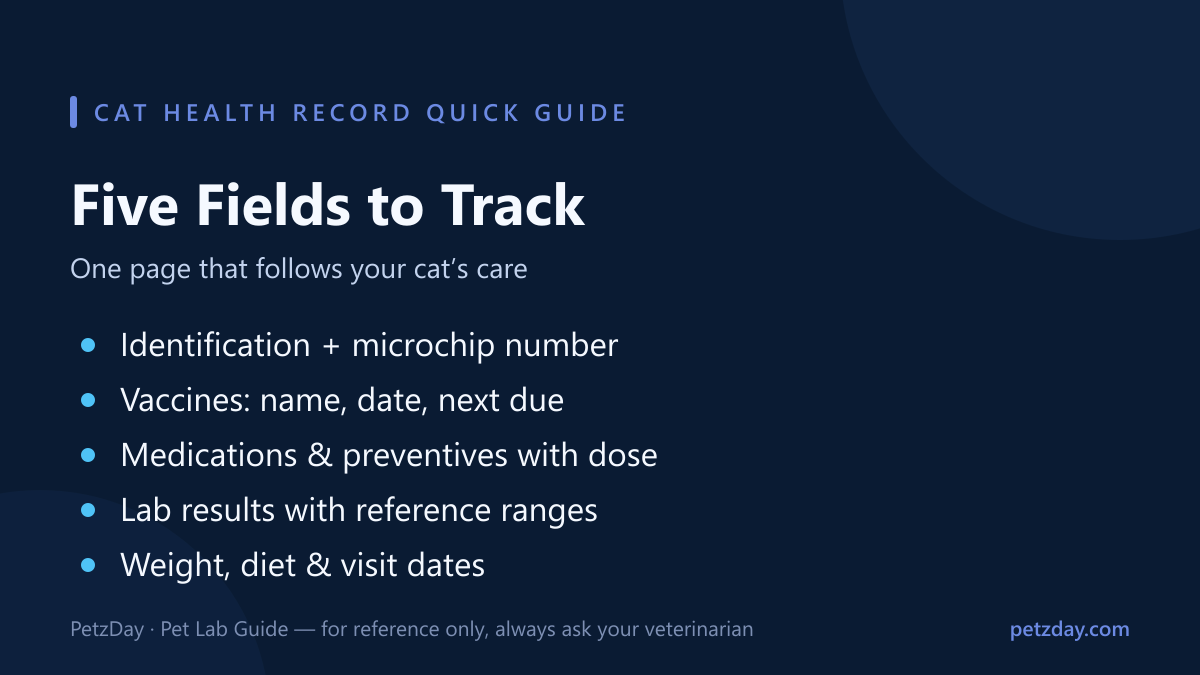
Five lines cover identification, vaccines, medications, labs, and weight.
Keep this five-line version on the fridge and the full eight-field template with your other pet paperwork, so the short version is always where a sitter or a neighbor can find it.
How to fill it in and keep it current
An out-of-date record is worse than none, so update the page the same day a dose, vaccine, or result changes. The goal is a log you can trust in an emergency, not a document you rebuild from memory.
- Fill it in after every visit. Write the visit date and what changed before you leave the parking lot, while the details are fresh.
- Copy numbers exactly from the report, including the lab's reference range and units — do not round from memory.
- Keep paper and digital copies. Paper on the fridge helps at home; a photo or app on your phone helps in an emergency lobby.
PetzDay keeps your cat's profile and a visit timeline on your phone — vaccine dates, medications, notes, and lab snapshots in one place you can pull up at the counter. It is your working record, not a replacement for the official chart your clinic keeps. To build the file behind this template, start with how to organize pet records when you see multiple vets, and make sure you can get copies of your pet's vet records when a new clinic asks for them. Create a free PetzDay account or browse all articles.
What a cat health record is not
A printable cat health record is a summary you keep — it does not diagnose, treat, or stand in for the medical record at your clinic.
- It is not the official chart. Your clinic keeps the legal medical record; ask them for copies when you move or see a specialist. A home page summarizes, it does not replace.
- It is not an emergency card. Emergency contacts are useful here, but the phone numbers belong on a separate card you keep in your wallet or on the fridge.
- It is not treatment guidance. The medication lines record what your vet prescribed; they do not tell you or a sitter to change a dose. That is always your vet's call.
FAQ
What should a cat health record include?
Identification and microchip number, vaccine names with dates given and next due, medications and preventives with the dose as prescribed, lab results with the lab's reference range, weight at each visit, and a short visit log. Add your vet's phone number and the nearest 24-hour emergency clinic. One page is enough; the record is a working summary, not a full medical chart.
Is there a free printable cat health record template?
Yes — the template on this page is free to copy and print. Use the five-line quick reference as the skeleton, then add your cat's own details after each vet visit. Keep a printed copy at home and a digital copy on your phone so the same information is available at the clinic.
How often should I update a cat health record?
Update it the same day anything changes: after each vet visit, vaccine, new medication or dose change, and whenever lab results come back. Weigh your cat regularly and log the number, because cats hide illness and a slow weight trend is one of the earliest changes a record will catch.
Can I use a printable record instead of my vet's records?
No. A home record is a working summary, not the official medical chart your clinic keeps. When you switch vets, move, or see a specialist, request copies of the official records directly from the clinic rather than relying on your own page.
Does the record need the emergency clinic's number?
Yes. Emergencies rarely happen during business hours, so include your regular vet plus the nearest 24-hour emergency clinic. If you keep a separate pet emergency card, copy the same numbers onto it so both documents stay current.
References
- VCA Hospitals — Know Your Pet
- AVMA — Pet owners resources
- Merck Veterinary Manual — Cat Owners
- Cornell Feline Health Center
Last reviewed: October 28, 2026. This article is for general education and does not replace an examination by your veterinarian.